
Nairobi doesn't have a bad season — but it has very different ones. The month you choose shapes whether your mornings are misty or golden, whether the garden is dusted dry or impossibly green, and how much you'll pay for the privilege.
The first thing to understand is that Nairobi is not hot in the way most people expect an African capital to be. The city sits at roughly 1,795 metres above sea level, and that altitude changes everything. Days are warm rather than scorching, nights are genuinely cool, and the climate has more in common with a mild highland spring than with Kenya's humid coast.
When is the best time to visit Nairobi? For most travellers, the generally drier periods — roughly January to February and June to September — are the most popular for outdoor activities, sightseeing and safaris. But Nairobi is a genuine year-round destination, and the wetter months bring greener landscapes, fewer crowds and their own rewards. The right month depends on what you want from the trip: wildlife, walking, warm afternoons, quiet attractions or a gentler budget.
One honest caveat before the detail: no period in Nairobi guarantees dry weather, and no month guarantees rain. This guide is built on long-term climate data — including the German Weather Service's climate table for Nairobi and the University of Cape Town's Nairobi Climate Profile — and seasonal patterns are averages, not promises about your specific travel dates.
Understanding Nairobi's Climate
Nairobi has what climatologists call a subtropical highland climate. The city lies just south of the equator, so the sun is strong and daylight barely varies — but the elevation keeps temperatures moderate all year. Average daily highs range from about 23°C in the coolest months to about 28°C in the warmest, a swing of only around five degrees across the entire year.
What changes far more than the afternoon temperature is the night. Nairobi's diurnal range — the difference between day and night — runs to around twelve degrees. Even in the warmest months the temperature drops after sunset, and in June and July average overnight lows fall to around 11°C. First-time visitors who packed only for the tropics are regularly caught out by how cold an early morning can feel.
Rainfall, not temperature, is what really defines Nairobi's seasons. Most of the city's rain falls in two periods: the long rains, roughly March to May, and the short rains, roughly November to December. Between them sits a relatively dry stretch from June to October, while January and February form a shorter, warmer dry window. Year to year the rains vary considerably — the short rains in particular are influenced by El Niño and La Niña cycles — so treat the calendar as a tendency, not a timetable.
Finally, a distinction worth holding onto: climate averages are not forecasts. The figures below describe what Nairobi typically does over decades of records. What it will do on the Tuesday you land is a question for a weather forecast, checked a few days before you travel.
Nairobi's Dry Seasons
Nairobi has two broadly drier periods, and they feel quite different from each other.
January and February are the warm, bright dry months. Afternoon highs average around 27–28°C, skies are often clear, and conditions suit almost everything: game drives, forest walks, outdoor lunches, city exploring. February is typically Nairobi's warmest month. This is a popular window, and demand for accommodation and safaris reflects that.
June to September is the longer dry stretch, but it is not the warmer one. These are Nairobi's coolest months — July's average high is around 23°C, with mornings that can dip near 11°C — and mid-period often brings grey, overcast starts that burn off slowly. What you get in exchange is very little rain and comfortable all-day walking weather, provided you bring a jumper.
For wildlife viewing, drier months have a practical advantage: vegetation thins and animals concentrate around water, making them easier to spot. For packing, think layers — a cool morning can become a warm afternoon within the same day. And for demand, remember that dry season is when much of the northern hemisphere travels, so popular dates book out early. One demand spike worth knowing about: in June and July 2027 Nairobi co-hosts the Africa Cup of Nations — our AFCON 2027 accommodation guide covers what that means for the city.
Nairobi's Rainy Seasons
The long rains, roughly March through May, are Nairobi's wettest period, with April typically the wettest month of the year. The short rains, roughly November into December, are lighter and less predictable. Between them they deliver the majority of the city's annual rainfall.
Here is what the rainy seasons are not: weeks of continuous drizzle. Nairobi's rain more often arrives as heavy afternoon or evening downpours, with usable dry hours on either side. Mornings are frequently clear, which is why experienced visitors schedule outdoor plans early and keep afternoons flexible.
The honest tradeoffs: heavy rain slows Nairobi's already serious traffic, forest trails turn muddy, and a downpour can rearrange an afternoon. The honest rewards: the city turns intensely green, the air clears of dust, gardens and parks are at their best, and attractions are quieter. Rainy-season travel can also be easier on the budget, though we'd caution against assuming prices always fall — Nairobi is a business and regional travel hub, and its demand doesn't move in a simple tourist-season pattern.
Nairobi Weather Month by Month
Temperatures below are long-term average daily highs and lows from the Nairobi airport weather station; the city centre, being higher, typically runs a degree or so cooler.
January — Warm days and generally drier conditions
Average high around 27°C, low near 13°C, roughly 40mm of rain. Warm, bright and one of the drier months — excellent for game drives, walking and outdoor dining. It's a popular month, so book accommodation and safaris ahead, and pack light layers: evenings still cool down.
February — A popular month for outdoor exploration
Average high around 28°C, low near 13°C, rainfall similar to January. Typically Nairobi's warmest month and one of its most reliable for outdoor plans. The warmth is pleasant rather than oppressive, but the equatorial sun at altitude is strong even on hazy mornings — hat and sunscreen are essential.
March — A transition toward wetter weather
Average high around 27–28°C, low near 14°C, rainfall climbing toward 70mm. March often starts like an extension of February, then tips toward the long rains as the month progresses — the timing varies year to year. A reasonable month for flexible travellers: warm, with thinning crowds and increasingly wet afternoons.
April — Often among the wetter months
Average high around 26°C, low near 15°C, roughly 155mm of rain — typically the wettest month of the year. Expect frequent heavy showers, usually later in the day, and slower traffic on wet days. The rewards are real: peak greenery, quiet attractions and often clear mornings. Bring a proper rain jacket and shoes that handle mud.
May — Green landscapes and lingering rains
Average high around 24–25°C, low near 14°C, rain easing to roughly 110mm as the long rains taper. A month of transition: still wet, but generally less so than April, with the landscape at peak green. Suits travellers who prioritise scenery and quiet over guaranteed dry afternoons.
June — Cooler temperatures and changing conditions
Average high around 24°C, low near 12°C, rainfall down to roughly 25mm. The turn into the long dry season: rains retreat, the air cools and grey mornings become common. Comfortable and uncrowded for sightseeing, with game viewing improving as the bush dries out. Bring a warm layer — Nairobi's altitude makes itself felt.
July — Nairobi's cooler season
Average high around 23°C, low near 11°C, only about 10mm of rain — typically the coolest and one of the driest months. Mornings are properly cold and often grey until midday; afternoons turn crisp and bright. Prime season for game drives, and one of the busiest travel months internationally. A fleece is a daily essential, not an afterthought.
August — Cool mornings and relatively dry conditions
Average high around 23°C, low near 11–12°C, rainfall around 15mm. July's pattern continues: misty mornings, dry air, comfortable afternoons. Reliable outdoor weather without heat, pairing naturally with the wider East African safari season. Evenings call for a fireside — a season when a cottage fireplace earns its keep.
September — Gradually warmer weather
Average high around 25–26°C, low near 12°C, rainfall around 25mm. The dry season's gentle exit: mornings lose their bite, afternoons warm up, and the rains are still weeks away. One of the most pleasant all-round months — warm enough for the pool, dry enough for the trail, and slightly quieter than the July–August peak.
October — A transition toward the short rains
Average high around 26–27°C, low near 13°C, rainfall rising toward 45mm. Often still dry early in the month, with the short rains usually arriving later — though their onset is one of the more variable features of Nairobi's year. A good-value shoulder month: warm days and fewer visitors, with the back half kept flexible.
November — Short-rains season
Average high around 25°C, low near 14°C, roughly 120mm of rain — typically the second-wettest month. Afternoon and evening showers, lush growth and quieter attractions; mornings are often clear and beautiful. Suits travellers happy to work around the weather in exchange for a greener, calmer city.
December — Festive travel and variable weather
Average high around 25°C, low near 13–14°C, rain easing through the month to roughly 80mm. The short rains often linger into the early weeks, then conditions typically dry toward Christmas. The festive period itself is one of Nairobi's busiest travel times — flights and accommodation fill early, so book well ahead.
Nairobi Weather at a Glance
The table below summarises Nairobi's climate using one consistent dataset: long-term averages from the Nairobi airport weather station (elevation 1,624m), published by the German Weather Service (DWD). Temperatures are average daily highs and lows; rainfall is the average monthly total. The city centre sits higher and typically runs slightly cooler. These are historical averages — they describe the climate, not your specific travel dates.
| Month | Avg high / low (°C) | Avg rainfall (mm) | Travel considerations |
|---|---|---|---|
| January | 27 / 13 | 42 | Warm, mostly dry; popular for safaris and outdoor plans |
| February | 28 / 13 | 48 | Warmest month; excellent for outdoor activities; busy |
| March | 28 / 14 | 69 | Warm; long rains often begin later in the month |
| April | 26 / 15 | 157 | Typically wettest month; green, quiet, flexible afternoons |
| May | 25 / 14 | 108 | Rains easing; lush landscapes; mild temperatures |
| June | 24 / 12 | 27 | Dry season begins; cool mornings; uncrowded |
| July | 23 / 11 | 12 | Coolest month; very dry; peak international travel |
| August | 23 / 12 | 14 | Cool, dry, misty mornings; busy safari season |
| September | 26 / 12 | 25 | Warming up; dry; one of the most pleasant months |
| October | 27 / 13 | 43 | Warm shoulder month; short rains often begin late |
| November | 25 / 14 | 121 | Short rains; green and quiet; clear mornings common |
| December | 25 / 14 | 80 | Rains easing; festive period busy — book early |
Best Time to Visit Nairobi for a Safari
Nairobi National Park — the world's only national park within a capital city — is open all year, and wildlife lives there in every season. But conditions do shift. In the drier months, vegetation thins and animals gather near water, which generally makes game easier to spot; tracks are also firmer underwheel. In the wetter months the park is greener, with excellent birding, though taller grass can make viewing harder.
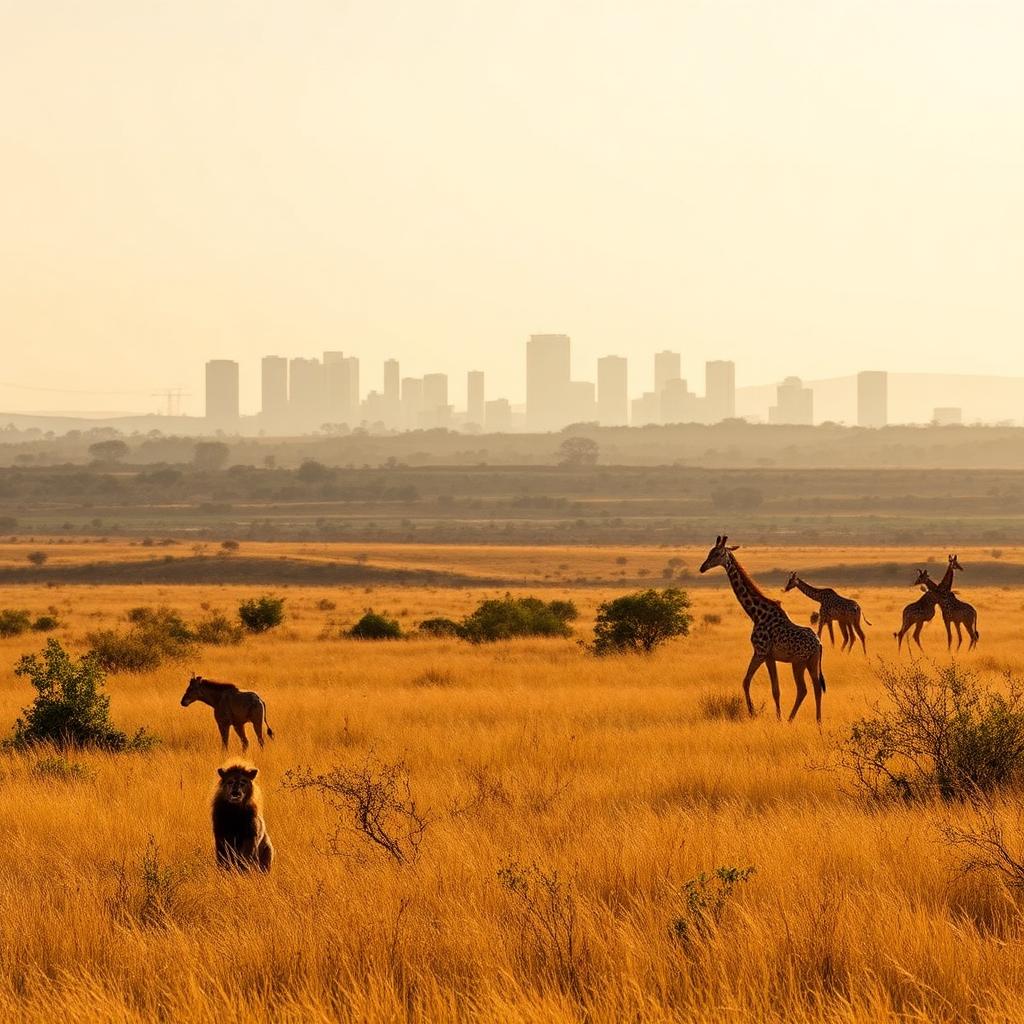
Whatever the month, the early morning game drive is the classic choice: animals are most active in the cool hours, and in mid-year those mornings are properly cold — dress for it. One important clarification: the Great Migration is a Maasai Mara event, several hours away, not a Nairobi National Park one. The park offers resident lions, rhinos, buffalo, giraffes and more against the city skyline, but no migration herds, and no month changes that.
For game-drive logistics and planning, see our complete guide to safaris in Nairobi and where to stay near Nairobi National Park. The Kenya Wildlife Service publishes current park information.

Best Time to Visit Nairobi for Families
Nairobi works for families in every month, but the calculation changes with school calendars — which differ between Kenya, Europe, North America and elsewhere, so plan around your own. The drier windows (January–February, June–September) make outdoor attractions simplest: the Giraffe Centre, game drives and forest walks all run smoothly, and July–August's cool weather is comfortable for children who struggle with heat.
The wetter months ask for more flexibility but give back quieter attractions and greener scenery. The family-proof strategy is the local one: outdoor plans in the morning, a relaxed lunch, and a flexible afternoon. Rainy-day backups include museums, indoor play centres and the city's malls — and a self-catering base with space to spread out matters more when a downpour keeps everyone inside for an hour. Our three-day Nairobi family itinerary maps out days that work in any season.
Best Time to Visit Nairobi for Nature and Outdoor Activities
Nairobi's outdoor life — the Giraffe Centre, the Karen Blixen Museum gardens, Karura Forest, the Oloolua Nature Trail, Nairobi National Park, garden restaurants — is available year-round, but each season changes the texture. Dry months mean firm trails, reliable picnic weather and clear views toward the Ngong Hills. Wet months mean waterfalls actually flowing, forests at their lushest and gardens in full flush.
If your trip leans toward walking and outdoor dining, the drier windows are the safer bet, with September a particular sweet spot. If you love green landscapes and don't mind a muddy path, April, May and November will reward you. Either way, the rule that serves locals well applies to visitors: do the outdoor thing in the morning. Our weekend guide to Nairobi shows how much fits into two well-paced days.
When Is Nairobi Cheapest to Visit?
Nairobi doesn't follow the simple high-and-low-season pricing of a pure safari destination. It's East Africa's business and conference hub, a regional flight crossroads and a city with its own calendar of events — so accommodation demand can spike in any month when a major conference lands, and soften at times you'd expect it to peak.
That said, some patterns hold. The popular dry windows — especially July to September and the festive weeks around Christmas and New Year — tend to be the most expensive and the first to fill, for both flights and accommodation. The wetter months often bring softer demand and better value, though we'd stop short of promising that any specific month is always cheapest: the evidence doesn't support that kind of claim.
The practical advice: compare rates across a few date combinations rather than assuming a season, book early for the popular windows, and consider the shoulder months — March, June, October, early December — where weather and value often balance well. Booking directly with your accommodation can also help; many properties reserve their best rates for direct guests.
What to Pack for Nairobi in Different Seasons
- Layers, always: T-shirts for warm afternoons, a fleece or jumper for mornings and evenings — in every month of the year.
- A proper warm layer for June–August: mid-year mornings around 11°C feel colder on an open game-drive vehicle.
- Rain protection for March–May and November–December: a packable rain jacket beats an umbrella on forest trails.
- Comfortable, closed walking shoes — waterproof ones if you're visiting in the rains.
- Sun protection year-round: hat, sunglasses and sunscreen. The equatorial sun at 1,800 metres is strong even on cool, cloudy days.
- Neutral-coloured clothing for game drives, and nothing precious for muddy trails in the wet months.
- For families: snacks, water bottles and a light change of clothes for children — Nairobi days involve more car time than maps suggest.
Where to Stay in Nairobi Throughout the Year
Season affects where you'll be happiest staying. In the warm, dry months, a garden and a pool earn their keep. In the cool mid-year weeks, a fireplace stops being a decoration and becomes the best seat in the house. And in the rains, space, shelter and a good kitchen matter more than a view.
Karen, the leafy suburb on Nairobi's south-western edge, suits every season: it's green, quiet and close to the attractions that bring people to the city — the Giraffe Centre, the Karen Blixen Museum, Nairobi National Park. We wrote about why Karen works as a base separately.
Jungle Oasis is our own small property in Karen: a Studio, two private cottages and a two-bedroom loft apartment in garden surroundings, each with self-catering facilities, ensuite bedrooms and Wi-Fi. The heated swimming pool takes the edge off cooler months, the cottages have their own indoor fireplaces for July evenings, and the gardens are at their greenest in the rains. Optional extras such as a private chef or pre-stocked groceries can be arranged in any season.

Choosing the Right Season for Your Nairobi Trip
There is no universally perfect month to visit Nairobi — there is only the right month for your trip. Want warm, dry days and don't mind company? January and February. Want crisp mornings, prime game viewing and peak-season energy? July and August. Want a balance of pleasant weather and thinner crowds? September, or the shoulder months either side. Want green landscapes, quiet attractions and softer prices, and you're happy to plan around afternoon rain? The wet months will surprise you.
What Nairobi offers in every season is the same underneath: a mild highland climate, wildlife on the city's edge, forests and gardens, and days that reward an early start. Choose your month by your priorities, pack for cool mornings whatever the calendar says, and the city will do the rest. And if you're looking for a base that works in every one of those seasons — pool in February, fireplace in July, garden in the rains — you know where to find us.
Frequently Asked Questions
What is the best month to visit Nairobi?
There is no single best month, but September comes close for many travellers: warm afternoons around 26°C, very little rain, and slightly fewer visitors than the July–August peak. For warm, dry weather, January and February are excellent; for prime safari conditions, the dry months from June to September are the classic choice.
When is the rainy season in Nairobi?
Nairobi has two rainy seasons. The long rains run roughly from March to May, with April typically the wettest month. The short rains run roughly from November into December and are lighter and less predictable. The driest period is generally June to September, with January and February forming a shorter, warmer dry window.
What is the coldest month in Nairobi?
July is typically Nairobi's coolest month, with average daily highs around 23°C and overnight lows near 11°C. Mornings can feel genuinely cold, especially on early game drives, so pack a warm layer even though Nairobi sits almost on the equator.
Does it rain all day during Nairobi's rainy season?
Rarely. Nairobi's rain usually arrives as heavy afternoon or evening showers, with usable dry hours on either side — mornings are often clear. The local strategy is to schedule outdoor activities early and keep afternoons flexible. Rainy-season travel remains worthwhile: the city is greener, quieter and often better value.
Is Nairobi worth visiting in July?
Yes — July is one of the most popular months. It's cool and very dry, with excellent conditions for game drives and outdoor activities, and it coincides with the wider East African safari season. The tradeoffs are chilly mornings (pack a fleece) and higher demand, so book accommodation and activities well ahead.
Is December a good time to visit Nairobi?
December is a tale of two halves. The short rains often linger into the early weeks, bringing afternoon showers and a green, quiet city. Conditions typically dry toward Christmas, but the festive period is one of Nairobi's busiest travel times — flights and accommodation fill early, so book well ahead if you're travelling over the holidays.