
Travel Guides
How to Plan a Successful Team Offsite in Nairobi: The Complete Guide
By Jungle Oasis · Published · 14 min read
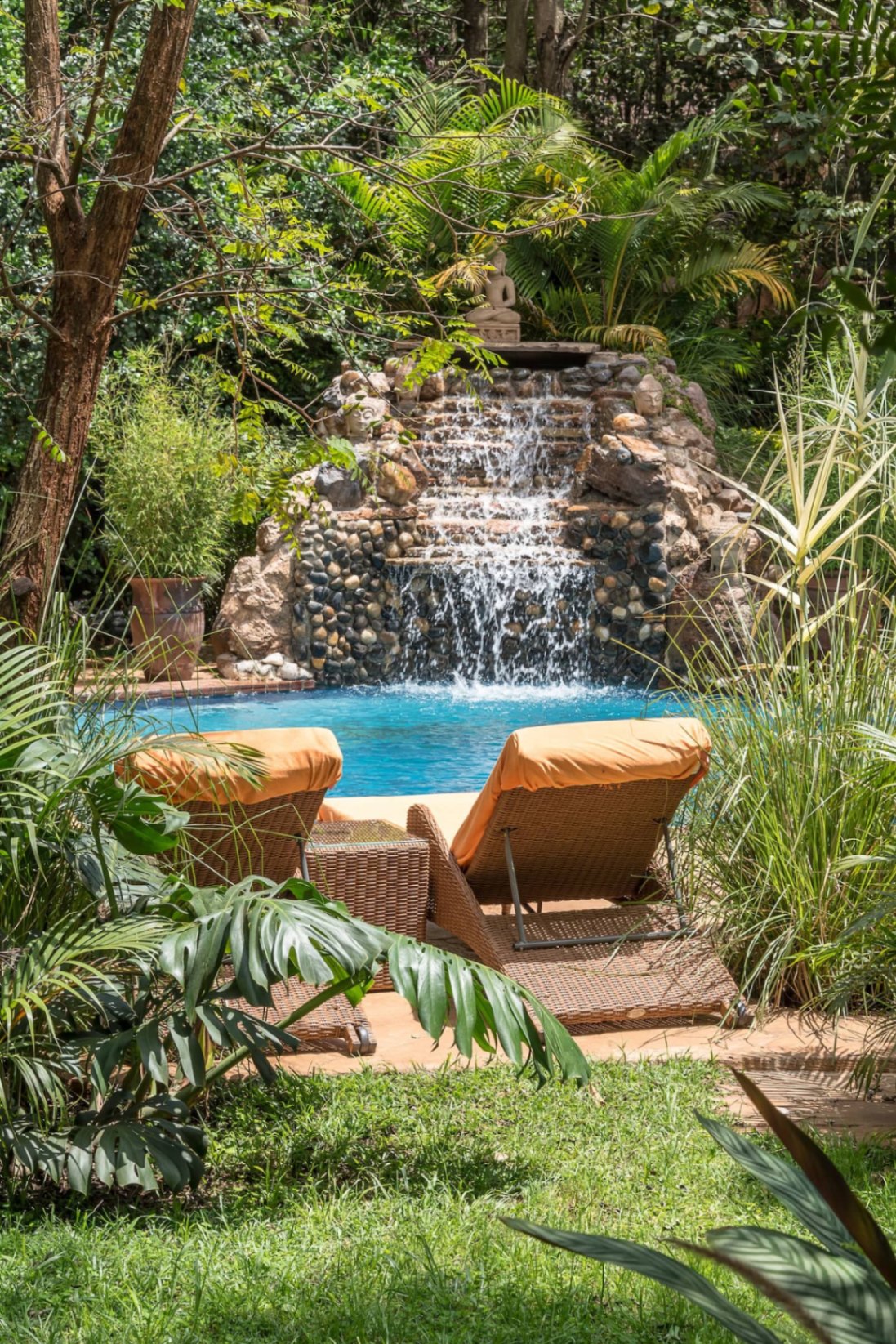
From choosing the right venue to organizing meals, activities and accommodation, here's how to plan a company offsite that delivers more than just a change of scenery.
Organizing a team offsite in Nairobi sounds straightforward until you start working through the details. Where should you host it? Should everyone stay overnight? How much time should you dedicate to meetings versus team activities? And how do you make sure the experience is genuinely worthwhile rather than simply relocating the office for a day?
A successful team offsite requires more than a beautiful venue. It needs a clear purpose, a thoughtful schedule and an environment where people can connect, collaborate and think differently.
Fortunately, Nairobi offers a wide range of possibilities, from traditional conference hotels and countryside retreats to intimate boutique properties surrounded by nature.
Whether you're planning a leadership retreat for eight people, a strategy workshop for twelve or a larger company gathering, this guide walks you through the decisions that matter.
1. Start With the Purpose of Your Team Offsite
Before searching for venues, ask yourself one question:
“What should be different when everyone returns to work?”
The answer determines almost everything else.
A team offsite focused on strategic planning will look very different from one designed to celebrate achievements or help colleagues build stronger relationships.
Common objectives include:
- Strategic planning: Reviewing company priorities, discussing challenges and agreeing on the next steps.
- Team bonding: Creating opportunities for colleagues to connect beyond their daily responsibilities.
- Leadership development: Giving managers and senior leaders time to reflect, exchange perspectives and align on decisions.
- Creative problem-solving: Stepping away from familiar routines to explore new ideas.
- Celebration and recognition: Acknowledging achievements and rewarding teams for their work.
Try to identify one primary objective and no more than two supporting objectives.
For example, a startup leadership team might decide that the main purpose of its retreat is to agree on the company's priorities for the next six months. Strengthening relationships between senior leaders could be a secondary objective.
This distinction matters because it helps you decide which activities deserve time and which are unnecessary.
2. Decide Between a Day Offsite and an Overnight Retreat
One of the first practical decisions is how long your team should spend together.
One-day team offsites
A day offsite can work well for focused workshops, quarterly planning sessions or team-building activities.
It's generally easier to organize and avoids accommodation costs.
However, the schedule can feel rushed, particularly when participants spend significant time travelling across Nairobi.
Two-day or overnight team retreats
An overnight retreat creates more breathing room.
Instead of squeezing discussions, activities and meals into a single day, teams can combine structured working sessions with informal conversations.
Some of the most valuable interactions happen outside the formal agenda: over breakfast, during an afternoon break or around the dinner table.
For smaller leadership teams, an overnight format can be particularly appealing because it allows participants to focus without the pressure of returning home immediately after the final meeting.
Three-day offsites
A longer retreat may be appropriate for annual planning, organizational restructuring or teams travelling from different locations.
However, more time doesn't automatically mean better results.
If the objectives can be achieved in two days, extending the retreat may simply increase costs and disrupt normal operations.
3. Choose the Right Location in Nairobi
The venue has a significant influence on the atmosphere of your offsite.
A conventional conference room might be ideal for presentations and formal meetings. But if your objective is to encourage open conversations, creative thinking and stronger relationships, a different environment may be more appropriate.
Nairobi offers several broad options.
City hotels and conference venues
Hotels in areas such as Westlands, Upper Hill and the central business district can be convenient for teams that require dedicated conference facilities, extensive technical equipment or larger meeting spaces.
They are particularly suitable for structured events with many participants.
Countryside retreats outside Nairobi
Destinations such as Limuru, Naivasha and other areas outside the city can provide a greater sense of escape.
These locations may work well for longer retreats, particularly when outdoor activities are central to the programme.
However, remember to account for transport costs, travel time and the practicalities of moving an entire team.
Boutique retreats in Karen
For smaller teams, Karen offers an interesting alternative.
The neighbourhood is known for its greenery, residential character and proximity to several of Nairobi's well-known attractions.
A smaller boutique property can provide a more intimate setting than a large hotel, particularly for leadership teams, founders and departments looking for privacy.
At Jungle Oasis Nairobi, for example, teams can enquire about staying in a private garden property with cottage-style accommodation, shared meals and space for informal discussions.
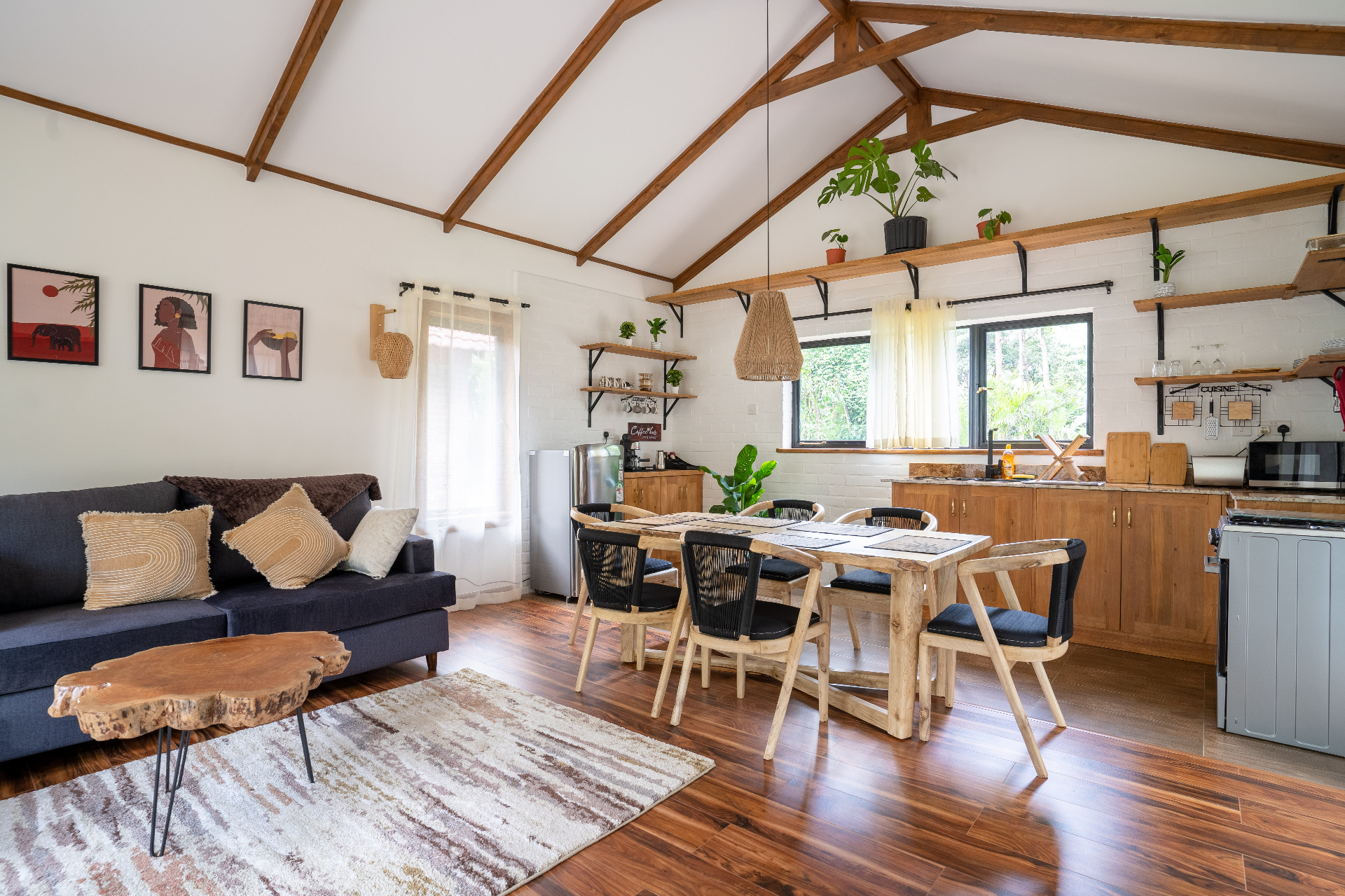
The experience is intentionally different from a conventional conference hotel. Rather than moving between meeting rooms and restaurant floors, colleagues can spend time together in a relaxed residential environment.
Explore team offsites at Jungle Oasis Nairobi.
4. Match Your Venue to Your Group Size
One of the most overlooked aspects of planning a company retreat is accommodation configuration.
A venue that sleeps twelve people doesn't necessarily offer twelve private bedrooms.
This distinction is particularly important for corporate groups.
Before confirming accommodation, ask:
- How many individual bedrooms are available?
- Are rooms private, shared or a combination of both?
- Do shared rooms have separate twin beds?
- How many bathrooms are available?
- Can colleagues have sufficient privacy?
- Are there appropriate common spaces for everyone to gather?
Some teams are comfortable with twin-sharing arrangements, particularly when participants know each other well. Others require individual rooms for every attendee.
Neither approach is inherently better, but expectations should be established before booking.
For senior leadership retreats, private rooms may be preferred. For smaller departments with more flexible budgets, twin-sharing can make an overnight offsite more affordable.
5. Create a Realistic Budget
The cost of a corporate retreat in Nairobi depends on several factors: group size, venue, accommodation, meals, transport, meeting requirements and activities.
Instead of beginning with a fixed per-person estimate, build the budget around the actual programme.
Accommodation
Request a complete quotation for the group, including the room configuration, number of nights, applicable taxes and any additional charges.
For smaller teams, booking several units or an entire boutique property may be worth considering.
Meals and refreshments
Food can represent a meaningful portion of the total budget, particularly for overnight retreats.
Consider whether your team requires:
- Breakfast each morning
- Lunch during working sessions
- Group dinners
- Tea, coffee and snacks between meetings
- Drinking water throughout the day
- Special dietary arrangements
A full-board package can simplify planning, but it may not always be necessary.
For example, a team arriving late on Friday and leaving Sunday morning might only need two breakfasts, one lunch and two dinners.
Meeting facilities
Check whether the venue charges separately for meeting spaces, screens, projectors, flipcharts, sound equipment or exclusive use of the property.
Transport
Account for airport transfers, shared transport from the office and any excursions.
Activities and facilitation
A professionally facilitated workshop or external team-building programme may be worth the investment when the retreat has specific organizational objectives.
Contingency
Consider setting aside approximately 10% of the estimated budget for unexpected expenses. This is a planning allowance, not a standard venue charge.
6. Design an Agenda That Balances Work and Connection
One of the biggest mistakes companies make is filling every available hour with presentations.
An offsite should create opportunities for focused work, but it should also allow participants to reflect, connect and recharge.
Here's an example of a two-night corporate retreat.
Day 1: Arrival and connection
| Time | Activity |
|---|---|
| 2:00 PM | Arrival and check-in |
| 3:00 PM | Welcome refreshments |
| 3:30 PM | Introductions and retreat objectives |
| 4:30 PM | Informal team activity |
| 6:30 PM | Free time |
| 7:30 PM | Group dinner |
The first day should establish a comfortable atmosphere without overwhelming participants.
Day 2: Strategy and collaboration
| Time | Activity |
|---|---|
| 8:00 AM | Breakfast |
| 9:00 AM | Opening session and priorities |
| 10:30 AM | Coffee break |
| 11:00 AM | Strategy workshop |
| 1:00 PM | Lunch |
| 2:00 PM | Breakout discussions |
| 3:30 PM | Break |
| 4:00 PM | Decisions and action planning |
| 5:00 PM | Free time |
| 7:00 PM | Team dinner |
Notice that the schedule includes substantial breaks.
These aren't wasted hours. They give participants time to process ideas and continue conversations more naturally.
Day 3: Reflection and departure
| Time | Activity |
|---|---|
| 8:00 AM | Breakfast |
| 9:00 AM | Final reflections |
| 10:00 AM | Agree on next steps |
| 11:00 AM | Check-out and departure |
This is an illustrative agenda. Adjust it to your venue's actual check-in and check-out policies and the group's travel arrangements.
7. Plan Meals as Part of the Experience
Food is more than a logistical requirement during a team retreat.
Shared meals create opportunities for conversations that might never happen in a formal meeting.
For a small corporate offsite, having meals prepared on-site can be especially convenient. It reduces the need to coordinate restaurant reservations, arrange transport or interrupt the programme.
Breakfast
Keep breakfast flexible enough to accommodate different preferences and dietary requirements.
A combination of hot options, fruit, bread and beverages can work well for a mixed group.
Lunch
For a working retreat, lunch should be satisfying without leaving participants feeling overly full before afternoon sessions.
Buffet-style or pre-arranged group meals can make service more efficient.
Dinner
Dinner offers an opportunity to make the experience feel different from an ordinary working day.
Depending on the venue and budget, possibilities might include a relaxed group dinner, barbecue or specially prepared menu.
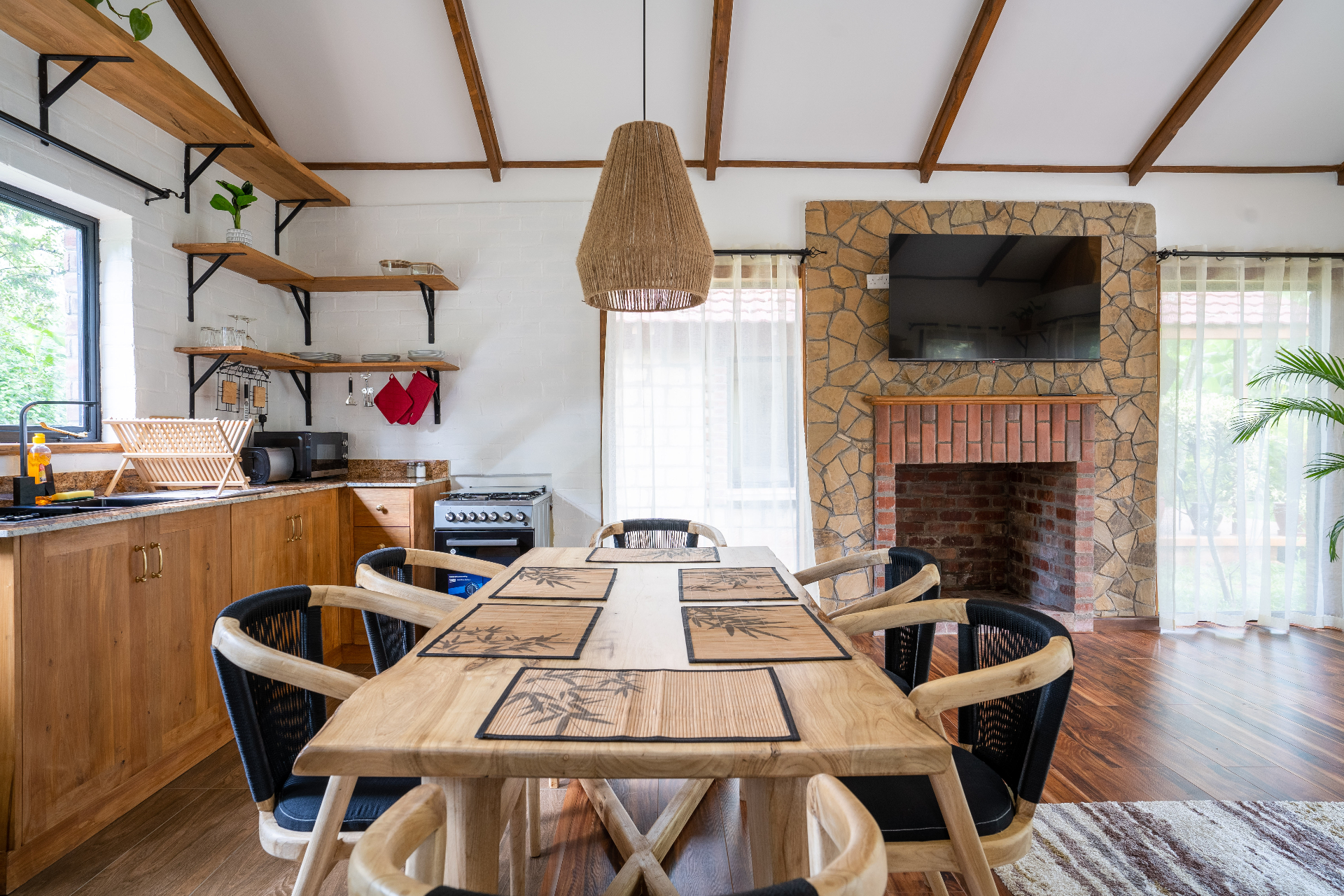
At Jungle Oasis Nairobi, private chef arrangements can be discussed as part of a tailored offsite experience.
Rather than requiring every team to follow the same catering package, meal arrangements can be discussed around the group's programme and preferences.
8. Include Team Activities That Actually Serve a Purpose
Not every team enjoys traditional team-building games.
For some groups, competitive challenges and outdoor activities are energizing. For others, they feel forced or uncomfortable.
Choose activities based on the team's culture and the objectives of the retreat.
For leadership teams
Consider facilitated strategy discussions, scenario-planning exercises, peer coaching or structured reflection sessions.
For newly formed teams
Activities that encourage introductions, shared problem-solving and informal conversation may be more appropriate.
For established teams
A shared experience outside the usual work environment can help colleagues reconnect.
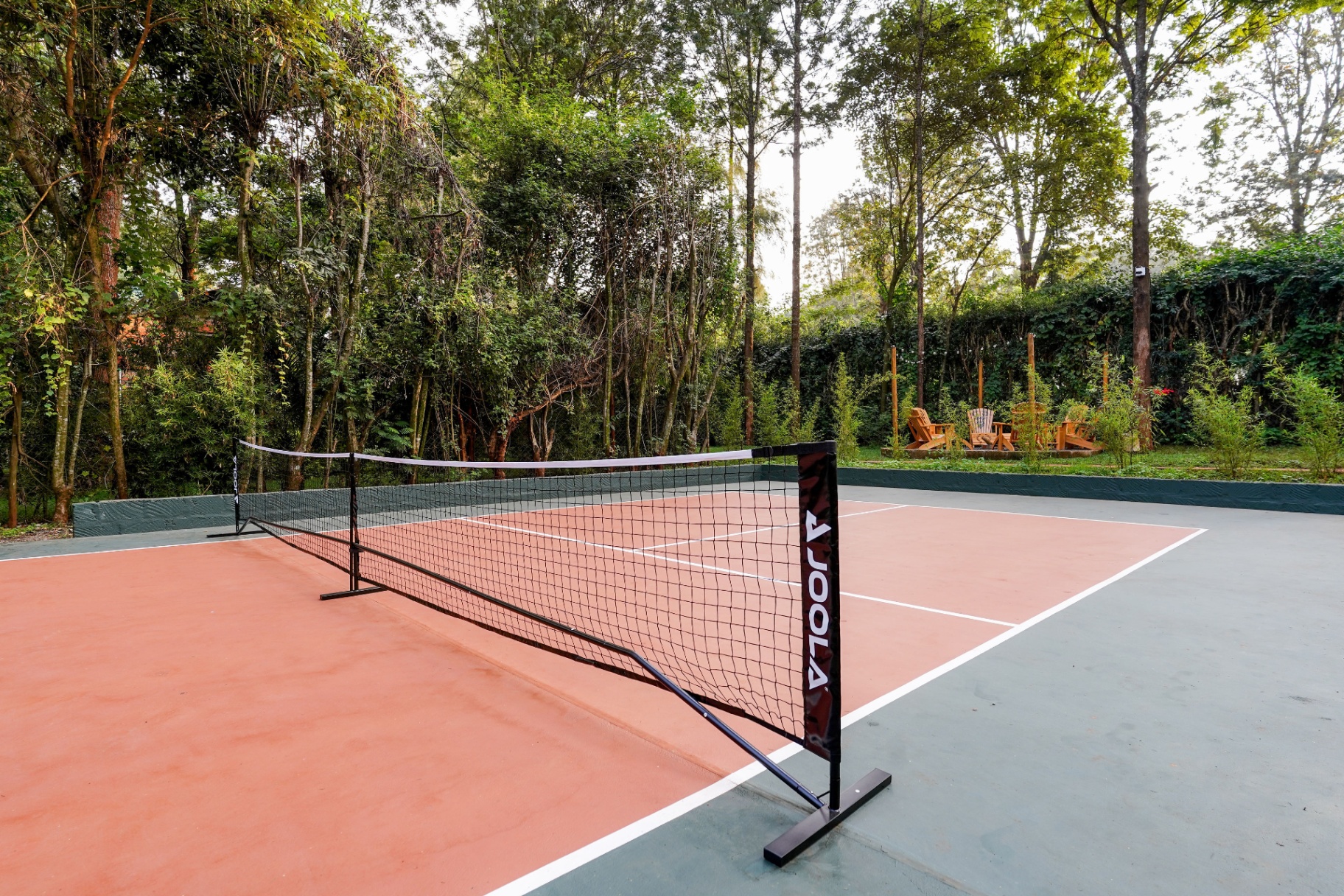
This might include a group meal, guided excursion, creative workshop or outdoor activity.
For teams visiting Nairobi
A local experience can make the retreat more memorable.
Depending on the group's interests, options may include a guided visit to Nairobi National Park, a cultural experience or time exploring the Karen area.
Nairobi National Park is particularly distinctive because it allows visitors to experience wildlife close to a major capital city.
Any safari or excursion should be planned around current availability, park regulations, transport and entrance fees.
9. Think Carefully About Transport and Accessibility
Nairobi's traffic can have a significant impact on event schedules.
A venue may look conveniently located on a map, but actual journey times can vary considerably depending on departure point, route and time of day.
Before booking, establish where participants will be travelling from.
For locally based teams, shared transport from the office may simplify arrangements.
For international participants, consider airport transfers and arrival times.
You should also check practical accessibility requirements, including mobility needs, step-free access where required and the suitability of outdoor spaces.
If participants are arriving on different flights, avoid scheduling essential sessions immediately after the earliest check-in time.
A little flexibility can make the first day considerably more enjoyable.
10. Check the Practical Details Before Booking
A beautiful property isn't necessarily a functional corporate retreat venue.
Before confirming a booking, ask the venue about the following.
Internet connectivity
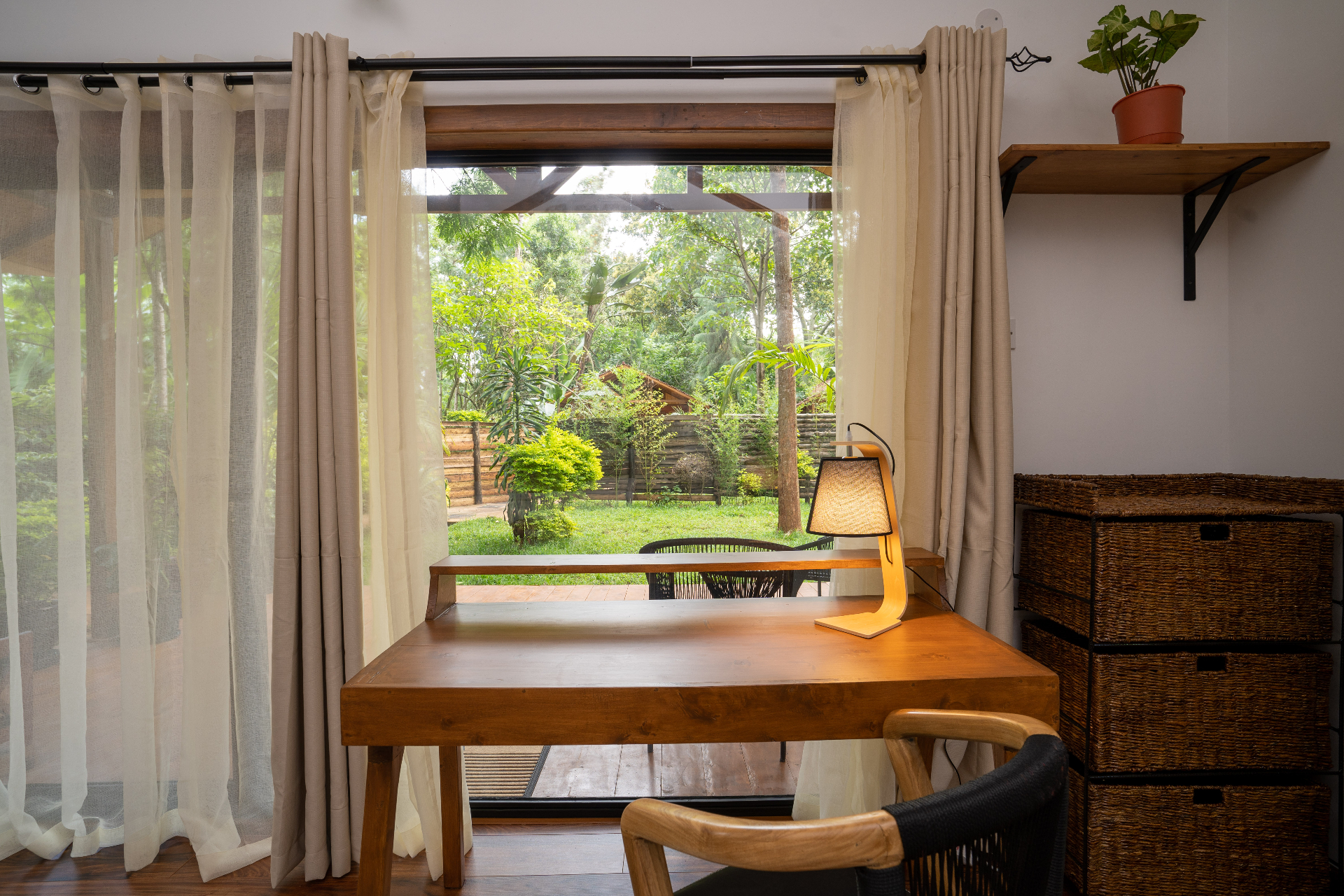
Is Wi-Fi available in the areas where the team will work? Is it suitable for video calls or online presentations?
Power and equipment
Are sufficient electrical outlets available? Can the venue accommodate presentation equipment, and what happens if there is a power interruption?
Meeting arrangements
Can everyone sit comfortably together? Is there a quiet area suitable for confidential discussions?
Privacy
Will other guests be using the same spaces? Is exclusive use possible, and does it involve an additional fee?
Weather
If the retreat includes outdoor sessions, what indoor alternative is available in case of rain?
Payment and cancellation terms
What deposit is required? When is the balance due? What happens if participant numbers change?
Get these details in writing before making a final commitment.
11. Common Team Offsite Planning Mistakes
Even well-intentioned retreats can fall short when practical details are overlooked.
- Mistake 1: Choosing a venue before defining the objective. A venue should support the programme, not dictate it.
- Mistake 2: Scheduling too many activities. A full calendar can leave participants exhausted rather than energized.
- Mistake 3: Overlooking room arrangements. Confirm the exact number of bedrooms, beds and bathrooms before making promises to colleagues.
- Mistake 4: Underestimating meal logistics. Clarify what's included, when meals will be served and how dietary requirements will be handled.
- Mistake 5: Forgetting about follow-through. A retreat can generate excellent ideas, but those ideas need owners, deadlines and a plan for implementation.
- Mistake 6: Treating the retreat as compulsory fun. Not everyone enjoys the same activities. Allow space for different personalities, comfort levels and accessibility needs.
12. Your Corporate Offsite Planning Checklist
Use this checklist before confirming your next team retreat in Nairobi.
Four to eight weeks before
- Define the retreat's objectives.
- Confirm approximate participant numbers.
- Establish the budget.
- Decide between a day event and an overnight retreat.
- Shortlist suitable venues.
- Request quotations and room configurations.
- Confirm dates and make the reservation.
Two to four weeks before
- Finalize the agenda.
- Confirm meeting-space requirements.
- Arrange catering and collect dietary information.
- Book any external facilitators.
- Organize transport.
- Share practical information with participants.
One week before
- Reconfirm attendance.
- Check room allocations.
- Confirm meal times and menus.
- Test or verify required equipment.
- Prepare workshop materials.
- Share the final agenda.
After the retreat
- Distribute key decisions and action points.
- Assign responsibility for follow-up tasks.
- Collect participant feedback.
- Review whether the original objectives were achieved.
13. Planning a Small Team Offsite in Karen, Nairobi?
If you're organizing a smaller corporate retreat and want something more personal than a conventional conference hotel, a boutique property may be worth exploring.
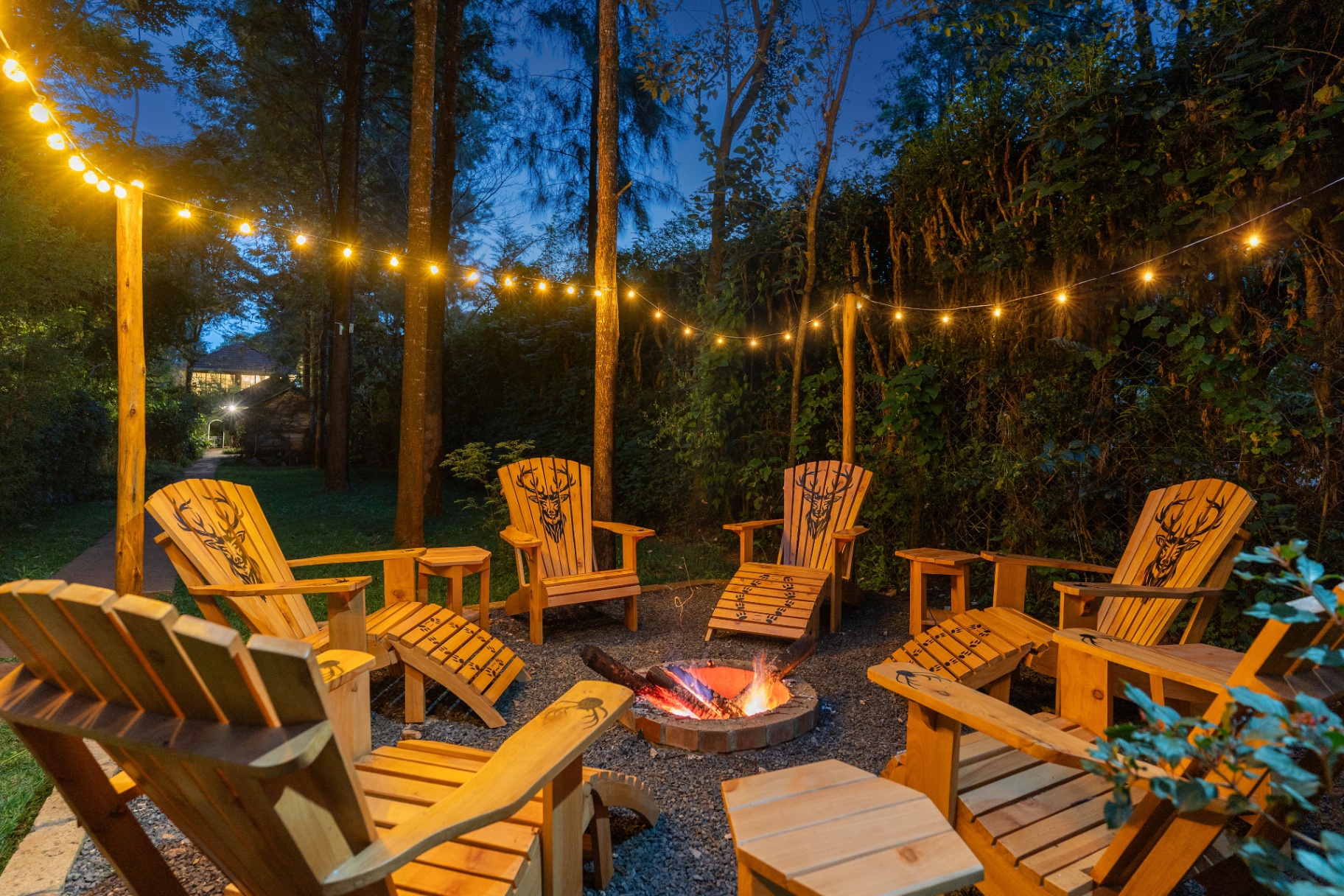
Jungle Oasis Nairobi is a garden retreat in Karen offering cottage-style accommodation in a green, private setting.
It's particularly suited to teams interested in combining productive working sessions with shared meals, informal conversations and time away from the usual office environment.
Depending on your group's requirements and availability, arrangements can include overnight accommodation, on-site catering and additional experiences such as a Nairobi safari.
Unlike a standardized conference package, the approach is flexible: the starting point is understanding your group size, dates, accommodation preferences and the type of retreat you want to organize.
Frequently Asked Questions
How many days should a team offsite last?
For a focused planning workshop, one day may be sufficient. For retreats combining strategic discussions with relationship-building, one or two nights can provide more flexibility. Longer programmes are best reserved for objectives that genuinely require additional time.
What is the difference between a team offsite and team building?
A team offsite is a gathering held away from the normal workplace. It may focus on strategy, planning, training or collaboration. Team building refers more specifically to activities designed to strengthen relationships and improve how people work together. A team offsite can include team building, but it doesn't have to.
How much does a team offsite in Nairobi cost?
Costs vary according to group size, venue, accommodation, catering, transport and activities. The most reliable approach is to request an itemized quotation based on your actual requirements rather than relying on a generic per-person estimate.
Is Karen a good location for a corporate retreat?
Karen can be a good option for smaller teams looking for a greener, more relaxed setting within Nairobi. Its suitability depends on participants' travel arrangements, venue facilities and the retreat's objectives.
Should colleagues share rooms during a corporate retreat?
Twin-sharing can be an option when participants are comfortable with it and each person has a separate bed. However, privacy preferences and company policies should be considered before assigning rooms.
Do you need a professional facilitator for a team offsite?
Not necessarily. Smaller teams may successfully run their own planning sessions. An external facilitator can be particularly useful for complex strategic discussions, sensitive organizational topics or situations where an independent perspective would help.
What should be included in a corporate retreat package?
Depending on the programme, a package might include accommodation, meals, refreshments, meeting facilities, transport and activities. Always clarify what is included and what will be charged separately.
Final Thoughts
A successful team offsite isn't measured by how many activities you organize or how impressive the venue looks.
It's measured by what your team takes away from the experience.
With a clear purpose, a realistic agenda, comfortable accommodation and thoughtful logistics, a retreat can create the space for conversations and decisions that are difficult to achieve during an ordinary working week.
Nairobi offers plenty of options, whether your team prefers a formal conference venue, a countryside escape or a more intimate garden retreat.
The key is finding the setting that fits your people and your objectives.
Planning a team offsite in Nairobi? Get in touch with Jungle Oasis Nairobi to discuss your dates, group size and requirements.