Travel Guides
New York to Nairobi: A Complete Guide to Flights, Travel Time & Arriving in Kenya
By Jungle Oasis · Published · Updated · 12 min read
Flying from New York to Nairobi is probably easier than you think.
For a journey that takes you from the East Coast of the United States to East Africa, there is surprisingly little complication involved. New York is one of the few cities in the United States with a nonstop connection to Kenya, so you can leave JFK and arrive in Nairobi without navigating a connection in London, Amsterdam, Doha or Dubai.
For many travellers, Nairobi is the starting point for a much bigger Kenya trip: a safari in the Maasai Mara, a few days in Amboseli, a flight to the coast, or some combination of all three.
But Nairobi is worth experiencing in its own right.
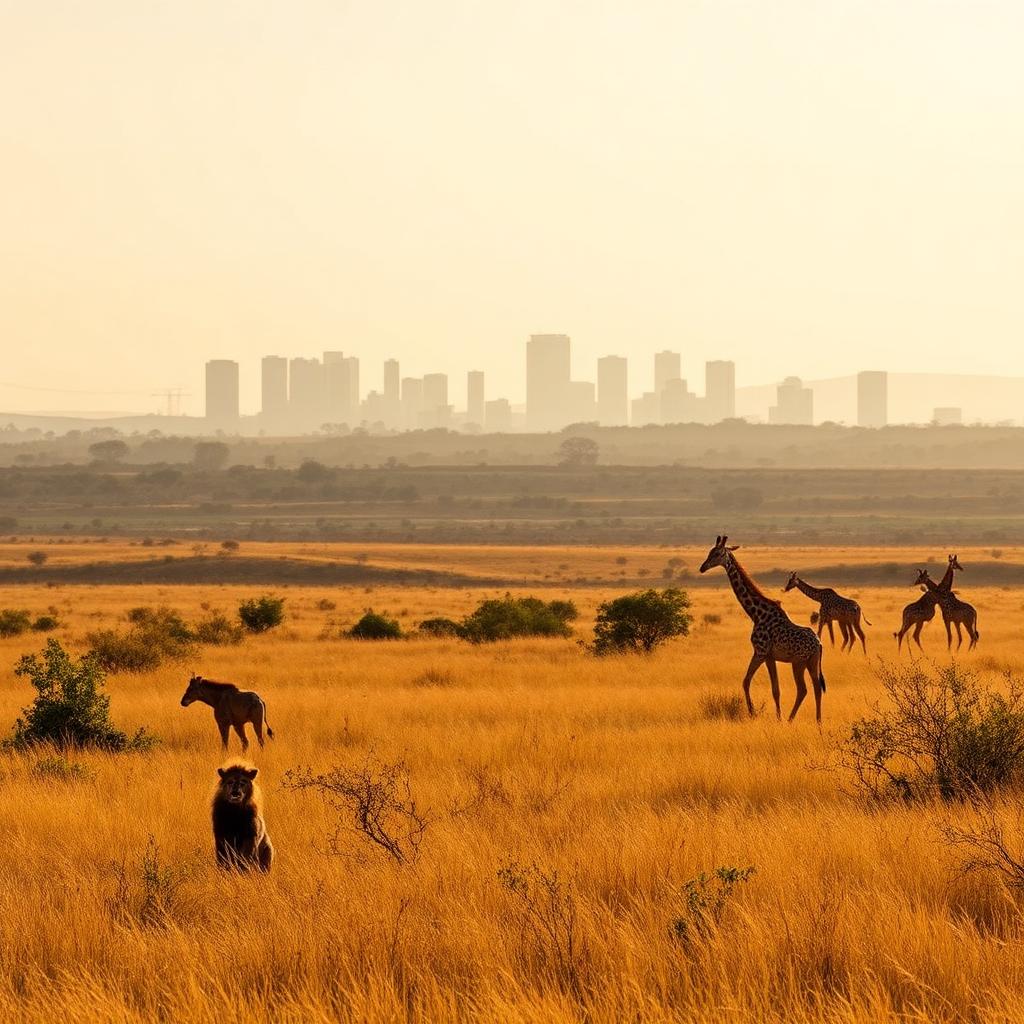
We may be slightly biased — Jungle Oasis is in Karen, Nairobi, after all — but this is one of the few capital cities where you can wake up for an early-morning game drive, see giraffes and rhinos with the city skyline in the distance, and be back at your accommodation that afternoon.
So if you're planning a trip from New York to Nairobi, this guide covers the journey itself, what to prepare before travelling, what to expect when you arrive and how we'd spend those first few days in Kenya.
✈️ Can You Fly Directly From New York to Nairobi?
Yes. Kenya Airways operates the nonstop route between John F. Kennedy International Airport (JFK) and Jomo Kenyatta International Airport (NBO).
That's a significant advantage if you're travelling from the northeastern United States.
Without the nonstop service, most journeys between the US and Kenya involve connecting somewhere in Europe, the Middle East or Africa. Depending on the route and connection, that can turn an already long journey into a considerably longer one.
The direct flight takes roughly 14 hours. It's still a long time to spend on an aircraft, obviously, but stepping onto one plane at JFK and getting off in Kenya is much easier than breaking the journey halfway.
If you're coming from somewhere outside New York, it's worth comparing the complete journey rather than simply looking at the longest flight. Connecting domestically to JFK and then flying nonstop to Nairobi can sometimes be preferable to taking an international itinerary with a connection elsewhere.
Flight schedules and frequencies change, so always check the current Kenya Airways timetable rather than planning around an old schedule you've found online.
How Long Is the Flight From New York to Nairobi?
Kenya Airways lists the average flight time between New York and Nairobi at approximately 13 hours and 45 minutes.
Actual flying time varies with the route, winds and conditions on the day, but you're essentially looking at a roughly 14-hour nonstop flight.
The bigger adjustment for many travellers is the time difference.
Either way, your body is going to notice.
It's worth keeping this in mind when planning the first day of your trip. It can be tempting to squeeze every possible experience into an expensive international holiday, but we'd leave your arrival day relatively open if your itinerary allows it.
JFK to Nairobi: What the Journey Is Actually Like
You'll depart from JFK and arrive at Jomo Kenyatta International Airport, usually referred to as JKIA or by its airport code, NBO.
JKIA is Nairobi's main international airport and the principal gateway into Kenya for most long-haul visitors.
Once you arrive, you'll go through immigration, collect your luggage and continue through the airport before meeting your driver or arranging onward transportation.
How long all of that takes varies. Immigration queues, baggage delivery and the number of international flights arriving around the same time can all make a difference.
The same applies once you're outside the airport.
Nairobi is a large city, and traffic is a fact of life here. A route that looks relatively short on a map can take considerably longer at the wrong time of day.
If you're staying with us at Jungle Oasis, we can arrange your airport transfer in advance.
🇰🇪 What Do You Need Before Travelling From the US to Kenya?
The administrative side of travelling to Kenya isn't particularly complicated, but it is something you should sort out before heading to JFK.
Kenya currently operates an Electronic Travel Authorisation (eTA) system rather than the previous visa system for most visitors.
You'll need to check whether you require an eTA, complete the application online and receive approval before travelling. The application asks for information including your passport and details of your trip.
Make sure your passport meets Kenya's current entry requirements as well. At the time of writing, this generally means having at least six months' validity remaining from your arrival date and at least one blank page.
We strongly recommend checking the official Kenyan eTA website shortly before your trip rather than relying solely on any travel article — including this one. Immigration rules can change, and an article written even a year ago can contain outdated entry information.
The same principle applies to health requirements.
If you're flying directly from the United States to Kenya, a yellow fever certificate isn't currently required simply because you're arriving from the US. But that doesn't necessarily mean yellow fever vaccination is irrelevant to your trip.
Your vaccination recommendations depend on where you're travelling within Kenya and whether you're continuing elsewhere in East Africa. Entry requirements can also change depending on countries you've recently visited or transited through.
For health advice, check current CDC guidance for Kenya and speak to a healthcare professional about your actual itinerary rather than treating Nairobi as representative of your entire trip.
When Is the Best Time to Travel From New York to Nairobi?
There isn't really one universally "best" month to visit Nairobi.
Nairobi sits at a relatively high elevation, so its climate is much milder than many first-time visitors expect when they imagine equatorial Africa.
Days are often pleasantly warm rather than unbearably hot, and mornings and evenings can actually feel quite cool. Bringing a light jacket is a good idea, particularly if you're planning early-morning game drives.
Kenya broadly experiences wetter and drier periods rather than four seasons in the North American sense.
The drier months are popular for safari travel, while greener periods have their own advantages: landscapes become lush, crowds can be smaller and wildlife viewing certainly doesn't suddenly stop because it has rained.
Your ideal dates will depend much more on the rest of your Kenya itinerary.
If you're coming specifically for the Great Migration in the Maasai Mara, for example, your timing considerations will be different from someone combining Nairobi with Amboseli and the Kenyan coast.
We wouldn't choose your travel dates based on Nairobi alone. Think about Kenya as a whole and work backwards from the experiences that matter most to you.
🦒 Should You Spend a Few Days in Nairobi Before Your Safari?
We think so.
A common first-time Kenya itinerary looks something like:
New York → Nairobi → immediately leave Nairobi → safari
We understand the logic. You've flown a long way, safari is probably one of the main reasons you came to Kenya, and every additional night adds to the cost of the trip.
But spending two or three nights in Nairobi gives you time to adjust while also experiencing a side of Kenya that many visitors rush straight past.
“Nairobi isn't simply a stopover city.”
Most notably, it has its own national park.
Nairobi National Park is a genuine national park with free-ranging wildlife, sitting immediately alongside Kenya's capital. You can be out early in the morning looking for rhinos, giraffes, buffalo and lions and occasionally see Nairobi's skyline behind them.
It's a slightly surreal experience.
And because the park is so close to the city, you don't need to commit several days to it.
If you're continuing to the Maasai Mara afterwards, we're not going to pretend Nairobi National Park replaces it. It doesn't.
It's simply a very different safari experience — and an excellent introduction to Kenya when you've only just arrived.
For guests staying at Jungle Oasis, we offer a private full-day Nairobi safari experience that starts with an early-morning game drive in Nairobi National Park and continues to the Sheldrick Wildlife Trust, lunch, the Giraffe Centre and Kazuri Beads before returning in the late afternoon.
🌿 Why We Think Karen Makes Sense for Your First Few Nights
Nairobi is enormous, and choosing where to stay can be confusing if you've never visited before.
Different neighbourhoods make sense for different kinds of trips. If you're coming primarily for meetings or business in central Nairobi, your priorities will obviously be different.
But for leisure travellers beginning or ending a Kenya safari, Karen is an area we'd seriously consider.

It's greener and more residential than many central parts of Nairobi, and several of the places international visitors want to experience are concentrated around Karen and neighbouring Lang'ata.
The Giraffe Centre is here. Nairobi National Park is nearby. The Sheldrick Wildlife Trust is nearby. There are restaurants, museums, shops and plenty of greenery.
That makes Karen particularly convenient if you want to spend a couple of days exploring without constantly crossing the city.
A Little About Jungle Oasis

Jungle Oasis is our boutique accommodation in Karen, Nairobi, surrounded by gardens and mature trees.
We host travellers who want something more private and personal than a conventional city hotel, whether Nairobi is their final destination or the beginning or end of a longer trip around Kenya.
There are different accommodation options depending on the size of your group, but what we're increasingly trying to offer goes beyond simply giving you somewhere to sleep.
If you've just arrived from the United States and don't want to spend your first two days figuring everything out yourself, we can help arrange parts of your stay around you — from airport transfers and our private Nairobi safari experience to private chef meals and grocery arrangements based on dietary needs.
You can do as much or as little as you want.
Some guests want a packed itinerary.
Others want to arrive, sleep, sit by the pool and remember what time zone they're in.
Both are completely reasonable.

How We'd Spend Three Nights in Nairobi After Flying From New York
If we were planning the beginning of the trip for a friend arriving from New York, we'd keep it fairly simple.
Three nights in Nairobi
Arrival Day
Do Almost Nothing
This isn't a wasted day. Arrange your airport transfer before travelling, get to your accommodation, shower, eat something and see how you feel. If you have energy later, great. Have dinner or enjoy your surroundings. But we wouldn't book a major attraction for three hours after your flight is supposed to land. International flights get delayed. Immigration takes time. Nairobi traffic happens. And you may simply be exhausted. Leave yourself some room.
First Full Day
Experience Nairobi
This is when we'd get up early. A morning game drive in Nairobi National Park is an excellent first proper experience in Kenya and doesn't require another flight or a long road transfer. You can combine the park with the Sheldrick Wildlife Trust, Giraffe Centre and other places around Karen, or keep the day lighter if you'd prefer. Either way, you return to Nairobi that evening rather than packing your bags and moving accommodation again.
Second Full Day
Slow Things Down
You probably have a multi-day safari coming. You don't need another 12-hour itinerary. Have a slow breakfast. Explore Karen. Go somewhere nice for lunch. Visit the Karen Blixen Museum if it interests you (more on why we love staying in Karen). Spend some time by the pool. Pick up anything you realised you've forgotten before heading into the bush. This is also a useful buffer day if your luggage has decided to take a different holiday from you. Then pack and get a proper night's sleep.
Day Four
Continue Your Kenya Adventure
Now head to the Maasai Mara, Amboseli, Laikipia, the coast or wherever comes next. By this point, you've adjusted a little to the time difference and already experienced something of Kenya before beginning the next part of the trip.
🧳 What Should You Pack for Nairobi?
One mistake first-time visitors sometimes make is assuming "Kenya" automatically means very hot weather.
Nairobi can be surprisingly cool.
Because of the city's elevation, mornings and evenings can feel chilly, particularly during certain parts of the year. If you're heading into Nairobi National Park at 6:00 AM in an open or partially open safari vehicle, you'll appreciate having another layer.
We'd bring lightweight clothing for warmer parts of the day, a sweater or light jacket, comfortable shoes and sun protection.
If Nairobi is only the first stop on your trip, though, pack for your whole itinerary.
The clothes you need for Nairobi, a Maasai Mara game drive and several days on the coast aren't necessarily the same.
And keep your essentials — medication, documents, chargers and at least one change of clothes — in your hand luggage.
That's good advice for almost any long-haul trip, but particularly useful when your checked suitcase contains everything you need for a safari starting two days later.
Money, Cards and Paying for Things in Nairobi
Kenya's currency is the Kenyan shilling (KES).
You don't need to arrive carrying a huge amount of cash.
Cards are widely accepted at many hotels, restaurants, shopping centres and established businesses in Nairobi. Mobile money — particularly M-Pesa — is deeply embedded in everyday Kenyan life, although that's generally more relevant to residents than a first-time visitor arriving from New York.
Having some Kenyan shillings available for smaller purchases and situations where cards aren't practical is still useful.
We'd generally avoid exchanging a large amount of money before leaving the United States. You can access Kenyan shillings after arrival.
It's also worth checking your bank's foreign transaction and ATM fees before travelling. Those little charges become irritating surprisingly quickly.
Is Nairobi Safe for American Travellers?
This deserves a more nuanced answer than either "Nairobi is dangerous" or "there's absolutely nothing to worry about."
Nairobi is a major city of millions of people. Different areas have different risk profiles, and normal big-city awareness matters.
We wouldn't recommend wandering around unfamiliar parts of the city displaying expensive belongings simply because you're on holiday. We'd also use established transportation rather than improvising every journey, particularly at night or immediately after arriving.
At the same time, large numbers of international visitors travel through Nairobi every year.
Where you stay, how you move around and whether you have reliable local arrangements make a significant difference to how the city feels.
Before travelling, check the latest U.S. State Department guidance for Kenya. Advisories can change and sometimes apply specifically to particular regions rather than the entire country, so read the actual guidance rather than just looking at a headline or advisory level.
From New York to Nairobi
There is something pretty extraordinary about boarding a plane at JFK and stepping off roughly 14 hours later in Kenya.
Once you arrive, give Nairobi a little time.
Go on your first game drive. Explore Karen. Eat well. Spend an afternoon doing very little if that's what you need. Then continue deeper into Kenya.
And if you're looking for somewhere quieter to land after New York, we'd love to welcome you to Jungle Oasis in Karen.
Come, put your bags down.
“Safari can start tomorrow.”