
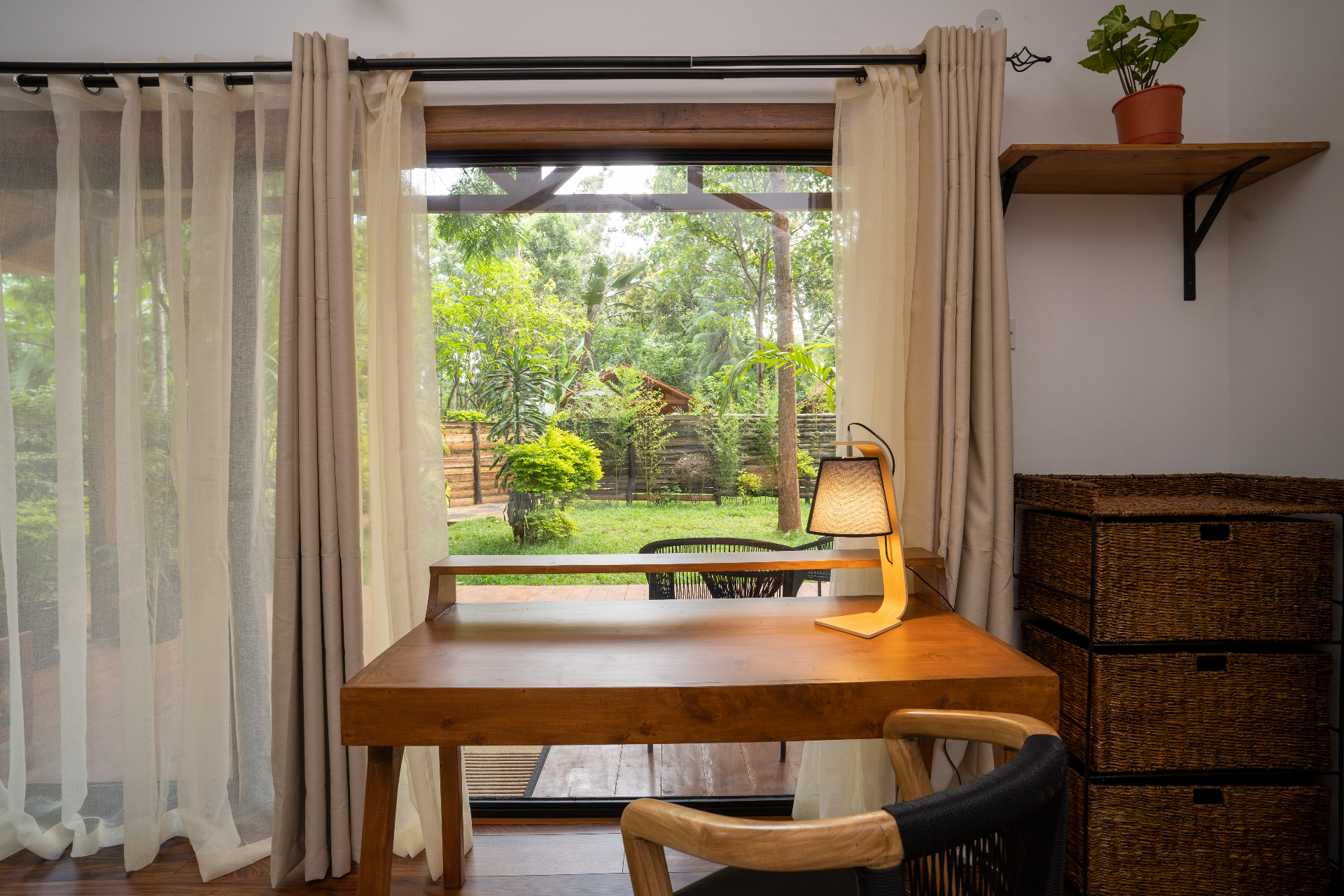
Most people come to Nairobi for a safari stopover and leave within days. A growing number stay for weeks or months — laptop open, calls at odd hours, game drive on Saturday. Working remotely from Nairobi is entirely possible, but it rewards people who plan.
Nairobi is East Africa's business capital: a city of technology companies, international organisations, conference hotels and a mature restaurant scene, with a national park inside the city boundary. It offers a fundamentally different remote-work experience from the beach towns that dominate digital nomad lists — more city, more substance, more friction, and more to do on a day off.
Is Nairobi a good place to work remotely? Yes, for the right person. Fibre internet is widely available in the neighbourhoods where remote workers tend to live, the coworking scene is well established, and the time zone (East Africa Time, UTC+3) overlaps conveniently with Europe and workable hours with Asia and the US East Coast. But it is not effortless: traffic is heavy, power and internet outages happen, costs vary enormously by neighbourhood, and Kenya's immigration rules need attention before you book a long stay. This guide covers the practical realities.
Why Consider Nairobi for Remote Work?
Nairobi's technology and entrepreneurial ecosystem — sometimes called the Silicon Savannah — means the infrastructure of remote work already exists here: coworking spaces, business services, international schools, private hospitals and a large community of people who work on video calls for a living. You're not pioneering anything; you're joining a city that already works this way.
The lifestyle argument is equally concrete. Few cities let you finish a morning of meetings and spend the afternoon watching rhinos against a skyline, walking an indigenous forest trail, or having a long lunch in a garden restaurant. Nairobi is also the region's flight hub, which makes weekend or week-long excursions — the Maasai Mara, the coast, Mount Kenya — unusually easy to arrange.
The honest counterweight: Nairobi is not a cheap, walkable, beach-adjacent nomad town. Daily life involves cars, planning around traffic, and accommodation costs that can approach European levels in the neighbourhoods most internationals choose. It suits people who want a real city with nature attached, not a resort with Wi-Fi.
Internet and Wi-Fi in Nairobi: What Remote Workers Should Know
Fibre-to-the-home is well established in Nairobi's residential neighbourhoods. The main providers are Safaricom Home Fibre, Zuku, Faiba (from JTL) and Poa Internet, with coverage strongest in areas like Westlands, Kilimani, Lavington, Kileleshwa and Riverside. Typical household packages run from around 20 to 100 Mbps; as a rough reference, a February 2026 overview of home internet in Nairobi put common packages between roughly KSh2,800 and KSh6,300 per month. Treat any such figures as indicative — packages and prices change.
Two things matter more than the headline speed. First, advertised speeds are not guarantees: real performance depends on the building, the router, the time of day and the provider's local congestion. Second, outages happen — both internet and electricity. Kenya Power is the country's sole electricity distributor, and planned and unplanned outages are a fact of Nairobi life, varying by area and season. Many households and most coworking spaces have backup power; not all do.
The standard local contingency is mobile data. Safaricom and Airtel both run extensive 4G networks across the city, and a phone hotspot has rescued many a Nairobi video call. If your work is time-sensitive — live calls, trading, broadcasts — plan for a primary connection plus a mobile backup from day one.
Because connectivity varies building by building, the questions you ask your accommodation provider matter more than any citywide average. Before booking a longer stay, ask:
- Is Wi-Fi included, and is the connection fibre-based?
- What speeds are normally available — and has anyone tested them recently?
- Is there a backup: a second line, a mobile router, or a generator or inverter for power cuts?
- What happens to the internet during a power outage?
- Is there a comfortable place to take calls — a table, a quiet room, reasonable acoustics?
- How is mobile reception at the property itself?
Best Nairobi Neighbourhoods for Remote Workers
Where you live in Nairobi shapes your working life more than in most cities, because cross-town journeys are slow. A balanced look at the areas remote workers most often consider:
Karen — Leafy, spacious and quiet, with large gardens, the Giraffe Centre, the Karen Blixen Museum and Nairobi National Park on the doorstep. Karen suits people who want a residential, green base and don't need to be in the commercial districts daily. The tradeoff is distance: trips to Westlands or the CBD take time, especially at rush hour. We wrote about why Karen works as a base in more detail. For the accommodation question itself, our guide to self-catering accommodation in Nairobi compares cottages, apartments and hotels for longer stays.
Westlands — Nairobi's busiest commercial and nightlife district, dense with restaurants, offices and coworking spaces. Maximum urban convenience and the shortest commute to many businesses; the tradeoffs are traffic, noise and some of the city's higher accommodation costs.
Kilimani — A mixed residential-commercial area of apartment blocks, cafés and restaurants, popular with younger professionals. Central and well supplied with services, though denser and busier than the garden suburbs.
Lavington — An established residential neighbourhood with shopping centres, cafés and good access to both Westlands and Kilimani. Quieter than either, with a suburban feel.
Gigiri and Runda — The diplomatic quarter near the UN complex and several embassies. Green, secure and quiet, appealing to some international professionals — but accommodation is limited and pricey, and you're far from the city's southern attractions.
| Neighbourhood | Character | Best for | Main tradeoff |
|---|---|---|---|
| Karen | Green, spacious, quiet | Nature access, space, longer stays | Distance from commercial districts |
| Westlands | Busy, commercial, social | Coworking, restaurants, networking | Traffic, noise, higher costs |
| Kilimani | Dense, central, urban | Apartment living, cafés, services | Congestion, less greenery |
| Lavington | Residential, suburban | Quiet with central access | Fewer coworking options |
| Gigiri / Runda | Diplomatic, secure, green | UN and embassy-linked professionals | Price, limited availability |
Coworking Spaces and Work-Friendly Cafés in Nairobi
Nairobi's coworking scene is mature. Nairobi Garage operates the largest network, with locations including Westlands, Kilimani and Karen — at the time of writing, day passes run around KSh2,000 plus VAT and monthly hot desks from about KSh11,000 plus VAT, with fibre connectivity, generator backup and meeting rooms. Other established operators include Ikigai (Lavington, Riverside and Westlands, with a garden setting and a wellness bent), Kofisi (several locations including Karen, aimed at a more corporate crowd) and iHub in Kilimani, the long-standing tech community hub. Verify current locations and rates on each operator's own site before planning around them — the scene shifts.
Cafés are the informal alternative, and Nairobi has plenty with good coffee and decent Wi-Fi. But a café is not an office: don't assume extended laptop use is welcome everywhere, power sockets are scarce, and taking calls is often impractical or impolite. Cafés suit a change of scenery for a couple of hours of email and writing; coworking spaces suit calls, deadlines and full workdays.
When choosing a space, the practical questions are: Is there backup power? Are there call booths or quiet zones? What are the day-pass hours (some close at 5pm; monthly members often get longer access)? How long is the journey from where you're staying at the time you'll actually travel? A cheaper desk forty minutes away costs more than it saves.
Cost of Living in Nairobi for Remote Workers
Nairobi can be surprisingly affordable or genuinely expensive, depending almost entirely on how you live. The main categories:
- Accommodation — the biggest variable. A room in a shared apartment, a furnished studio in Kilimani and a private cottage in Karen sit in entirely different price brackets; international-standard housing in the popular neighbourhoods is not cheap.
- Groceries — local produce is good value; imported brands cost import prices. Supermarkets such as Carrefour and Naivas cover both.
- Eating out — everything from inexpensive local cafés to fine dining. A local lunch can cost a few hundred shillings; dinner at a well-known restaurant is priced like a European city.
- Transport — ride-hailing (Uber, Bolt, Little Cab) is the default for most visitors; costs accumulate with distance and rush-hour surcharges.
- Mobile data — good value by international standards; bundles from Safaricom or Airtel cover most needs.
- Coworking — day passes roughly KSh800–3,000 depending on the operator; monthly desks from around KSh10,000 upwards.
- Leisure — national park fees, gyms, cinemas and restaurants add up at international prices in the venues internationals frequent.
- Health cover — travel or international health insurance is essential; private healthcare in Nairobi is good but not free.
We're deliberately not quoting a universal monthly budget. Crowd-sourced cost-of-living sites publish estimates, but they blend short-term visitor spending with resident costs and vary widely by methodology. Your real number depends on your neighbourhood, your accommodation standard and how often you eat out — build it from actual quotes for your dates rather than an average.
Getting Around Nairobi While Working Remotely
Nairobi runs on ride-hailing. Uber, Bolt and Little Cab are widely available, reasonably priced and the practical default for most remote workers; few visitors rent cars, and driving yourself in Nairobi traffic is an acquired skill. Matatus — the city's shared minibuses — are cheap and ubiquitous but not the easiest option for a working routine.
The single most important transport fact: proximity on a map does not mean a short journey. Nairobi's congestion is among the heaviest in the region, and a five-kilometre trip at 8am can take three times as long as the same trip at 11am. Choose accommodation close to your regular commitments — coworking space, gym, favourite café — and schedule cross-town trips outside peak hours where you can. Walking is pleasant within greener neighbourhoods like Karen, but the city as a whole is not built for getting around on foot, and after dark most people use a car even for short distances.
Visas and Legal Considerations for Remote Work in Kenya
This is the section to read twice. Visiting Kenya and being legally authorised to work remotely from Kenya are not the same thing. Most visitors enter on Kenya's Electronic Travel Authorisation (eTA), which covers tourism and short visits — do not assume it authorises remote work, even for a foreign employer.
Kenya does, however, have a dedicated route. The Class N Digital Nomad Permit, introduced by Legal Notice No. 155 of 2024 and open for applications since April 2025, is issued to people working remotely for companies registered outside Kenya, shareholders or representatives of foreign companies, and self-employed people serving clients abroad. According to the Directorate of Immigration Services, it is issued for one or two years (renewable), with a US$200 processing fee and a US$1,000 annual issuance fee. The application asks for bank statements or payslips, proof of accommodation, employer or client documentation and a letter of no objection from your home country's embassy, among other items.
Two cautions. First, published guidance on Class N is still thinner than for Kenya's older permit classes, and sources disagree on details such as minimum income — confirm current requirements directly with the Directorate of Immigration Services before applying. Second, holding a permit can have tax implications in Kenya and in your home country; that question is individual and beyond this guide's scope.
Staying Productive While Living in Nairobi
The Nairobi-specific productivity rules are mostly about time and electricity. Plan calls for the hours when your connection and your household are quietest — for many people that's morning, before the day's traffic and activity build. Keep a charged phone with a data bundle as your standing backup, and know your accommodation's plan for power cuts before the first one arrives.
Time zones work in your favour: East Africa Time overlaps the European working day almost completely, and US East Coast mornings are Nairobi afternoons. Batch cross-town errands into single trips outside rush hour, and treat travel days as light-work days. The other discipline is the pleasant one: with a national park next door, it's easy to let leisure eat the week. The people who thrive here tend to keep a firm workweek and take their Nairobi in concentrated doses — a Saturday game drive, a Sunday forest walk — rather than a daily trickle.
What to Do Outside Working Hours
This is Nairobi's winning argument. A morning game drive in Nairobi National Park before your first call is a genuinely normal thing to do here. Karen's attractions — the Giraffe Centre, the Karen Blixen Museum, forest trails — fill afternoons, and the city's restaurant and café scene covers every budget. Our complete guide to safaris in Nairobi covers the wildlife side, and our weekend guide to Nairobi shows how much fits into two days off.

Where to Stay in Nairobi for a Longer Remote-Work Visit
For stays of weeks or months, the main options are serviced apartments (hotel convenience, hotel prices), furnished short-term rentals (space and value, variable quality and Wi-Fi), hotels (simple, but wearing after a fortnight) and self-catering cottages or guesthouses (privacy, kitchens, gardens — the closest thing to living rather than visiting). The tradeoffs are privacy versus service, flexibility versus commitment, and location versus space.
For a longer stay, the questions from the internet section above become your checklist, and self-catering matters more than it does on a holiday: cooking occasionally, working from a garden table, and having separate space for calls all change how a month feels.
Jungle Oasis is our own small property in Karen: a Studio, two private cottages and a two-bedroom loft apartment, each with self-catering kitchens, ensuite bedrooms and Wi-Fi included, set in quiet gardens with a heated swimming pool. It suits remote workers who want a calm, residential base with space to work and nature next door — and who are happy being a drive rather than a walk from the commercial districts. It's a home-style stay rather than a coworking venue: there's no shared office on site, but Karen's coworking spaces are a short ride away, and we're glad to answer the connectivity questions above before you book.

Is Nairobi Right for Your Remote-Work Lifestyle?
Nairobi suits remote workers who want a substantial city rather than a resort: people who value good food, serious business energy and world-class nature on the doorstep, and who are comfortable planning around traffic, keeping a backup internet option and sorting their immigration paperwork properly. It particularly suits longer stays — a month or more — where the effort of settling in pays back.
It's a weaker fit if your priority is a walkable, inexpensive, beach-oriented nomad hub with a built-in social scene of people doing the same thing. Nairobi asks more of you logistically, and gives back a richer, more ordinary life in return.
If the balance sounds right, start with the practicalities: the permit, the neighbourhood, the internet questions. And if a quiet garden base in Karen fits the plan, we'd be glad to host your Nairobi chapter.
Frequently Asked Questions
Is Nairobi a good city for digital nomads?
Yes, with planning. Nairobi offers widespread fibre internet in residential neighbourhoods, an established coworking scene, a time zone that overlaps Europe, and exceptional access to nature. The tradeoffs are heavy traffic, occasional power and internet outages, and accommodation costs that vary widely by neighbourhood. It suits longer stays better than quick visits.
Can foreigners legally work remotely from Kenya?
Kenya's visitor eTA covers tourism and short visits and should not be assumed to authorise remote work. Kenya's dedicated route is the Class N Digital Nomad Permit, introduced in 2024 and open for applications since April 2025, for people working for foreign employers or clients. Confirm current requirements with the Directorate of Immigration Services — this is general information, not legal advice.
Does Nairobi have reliable internet?
Fibre-to-the-home is well established in the neighbourhoods where most remote workers stay, with typical packages of 20–100 Mbps from providers such as Safaricom, Zuku, Faiba and Poa. However, advertised speeds aren't guarantees and outages do occur. The standard local backup is a mobile data hotspot — plan for a primary connection plus a backup.
What are the best neighbourhoods in Nairobi for remote workers?
It depends on your working life. Westlands and Kilimani offer maximum convenience, coworking and restaurants. Lavington is quieter but central. Karen offers green, spacious, residential calm near Nairobi National Park, at the cost of longer journeys to commercial districts. Gigiri and Runda suit UN and embassy-linked professionals. Choose based on where you'll travel most often.
How much does it cost to live in Nairobi for a month?
There is no honest single figure — costs vary enormously by neighbourhood, accommodation standard and lifestyle. Accommodation is the biggest variable, from shared apartments to international-standard cottages. Crowd-sourced estimates exist but blend visitor and resident spending. Build your budget from actual quotes for your dates rather than a published average.
Is Karen a good area to stay while working remotely?
Yes, for the right working style. Karen is green, quiet and spacious, with fibre internet available, coworking spaces nearby, and the Giraffe Centre and Nairobi National Park on the doorstep. The tradeoff is distance from Westlands and the city centre, especially at rush hour. It suits remote workers who don't need to be in commercial districts daily.