Getting around Kenya usually means combining transport, not choosing one method for the whole holiday. A train can make sense for the coast, a flight for a distant safari camp, and a driver for the places between them. The useful question is what each leg needs to achieve.
The best way to travel around Kenya depends on your destinations, time, budget and luggage. Domestic flights suit longer journeys and selected safari airstrips; the SGR connects Nairobi and Mombasa; private road transfers offer door-to-door flexibility. Self-driving and intercity buses serve different travel styles. Kenya’s varied geography makes a single transport rule unhelpful.
Kenya Transport at a Glance — Which Option Should You Choose?
| Transport method | Best for | Advantages | Drawbacks | Check before booking |
|---|---|---|---|---|
| Domestic flights | Longer distances and served safari airstrips | Less time travelling between regions | Airport transfers; baggage restrictions; schedule changes | Exact airport, airstrip, luggage rules and pickup |
| SGR trains | Nairobi–Mombasa journeys | A rail alternative to the long road journey | Termini outside city centres; onward coastal transfers | Official ticket availability, identity documents and station access |
| Private transfers | Families, groups and door-to-door travel | Agreed pickup and flexible stops | Traffic and road conditions affect arrival | Vehicle type, inclusions and driver arrangements |
| Self-drive rental cars | Confident drivers seeking independence | Control over route and stops | Navigation, insurance and driving responsibility | Licence acceptance, cover, road restrictions and recovery support |
| Intercity buses | Travellers comparing public transport options | Connections between served towns | Variable comfort and arrival points; separate last-mile travel | Departure terminal, luggage policy and destination access |
| Safari operator transfers | Multi-day wildlife itineraries | Lodge access and game-drive logistics coordinated | Less independent scheduling; package terms vary | Whether transfers, park fees and game drives are included |
Compare complete journeys rather than ticket prices alone. A bus to a town is not equivalent to a safari vehicle taking you to a remote camp, and an airstrip flight does not automatically include the drive to your lodge. Ask for the total transport cost, including pickup, fuel, tolls and any access fees that apply.
Domestic Flights in Kenya
Nairobi is the main starting point for many domestic journeys, but it has two distinct airports. Jomo Kenyatta International Airport (JKIA) and Wilson Airport are not interchangeable. JKIA handles international and domestic services; Wilson is an important base for safari and regional flying. Read the airport name on every ticket, not just ‘Nairobi’.
Coastal flights and safari flights also work differently. A flight to a coastal airport still needs a road transfer to the beach hotel. A flight to a bush airstrip needs a confirmed camp pickup, sometimes with a substantial drive afterwards. The nearest airstrip on a map may not be the one your camp uses.
Safarilink and AirKenya publish Wilson-based services serving destinations including the Maasai Mara, Amboseli and Diani/Ukunda. Check their current booking systems for the particular airstrip and date. These examples establish options to investigate, not a promise of nonstop service or daily availability on every route.
Safari aircraft may call at several airstrips, so an advertised route is not necessarily nonstop. Baggage rules can be more restrictive than those on your international flight, including requirements for soft bags. Check the allowance for your specific service, whether it includes hand luggage, and what happens to excess baggage; do not assume paying extra guarantees it will travel.
Confirm airport and airstrip names directly with the airline and accommodation. Keep essential medication and documents with you, arrange pickup before departure, and check how weather or operational changes are handled. Separate tickets need particular care: an onward airline is not automatically responsible if an earlier flight arrives late.
When Is Flying Worth the Extra Cost?
Flying is worth comparing when a road leg would consume much of a short holiday, or when your accommodation is conveniently served by an airstrip. Count the drive to the airport, check-in, any intermediate stops and the lodge transfer. For a shorter road journey, a door-to-door vehicle can be the simpler choice even when the flight itself looks quick.
Kenya’s SGR Train — Nairobi to Mombasa
The Madaraka Express is Kenya Railways’ passenger service on the Standard Gauge Railway, commonly called the SGR. It links Nairobi and Mombasa, offering a useful alternative to flying or spending a long day on the road. Book through Kenya Railways’ official Madaraka Express portal, reached from the Kenya Railways website, rather than an unfamiliar ticket seller.
Nairobi Terminus is in the Syokimau area, not central Nairobi; Mombasa Terminus is at Miritini, not beside the Old Town or a beach resort. These locations matter as much as the train itself. Arrange transport to the departure station and from the arrival station, then plan backwards from the operator’s boarding and check-in requirements.
Kenya Railways’ published conditions list Economy, First and Premium classes; choose from those actually offered for your date and service. Check identification requirements, ticket names, baggage conditions and change or cancellation rules before payment using the official ticket terms. Keep your booking details available offline. Rail travel removes one long driving leg; it does not remove station transfers or the possibility of delays.
Nairobi to Diani Beach by Train
There is no direct SGR train to Diani Beach. Travel to Nairobi Terminus, take the train to Mombasa Terminus, then continue by road to your south-coast accommodation. Ask your transfer provider which route they will use and whether any crossing or traffic bottleneck affects that particular journey. Do not treat arrival at Miritini as arrival in Diani.
The Dongo Kundu/Southern Bypass corridor provides a road alternative to travelling through Mombasa Island and the Likoni ferry crossing. From Miritini, ask about the bypass route; do not assume every south-coast transfer requires a ferry. Routes through the island may use Likoni, where queues matter. Confirm current access and traffic with your driver: neither option is guaranteed faster on the day.
Nairobi to Watamu by Train
Watamu also requires an onward road transfer from the Mombasa area; it is not an SGR stop. Compare the entire train-plus-road journey with a suitable coastal flight and transfer. A late station arrival can be inconvenient if your accommodation lies well beyond Mombasa, so coordinate the pickup and expected check-in before choosing a service.
Private Transfers and Safari Vehicles
A point-to-point transfer takes you from one agreed location to another. A safari vehicle with a driver-guide may also provide game drives and accompany a multi-day itinerary. These are different purchases. A comfortable transfer car is not necessarily suitable, equipped or authorised for the roads and activities inside a wildlife area.
Private travel is useful when travelling with children, sharing costs as a group, carrying bulky luggage or wanting planned stops. Agree the pickup point, destination, vehicle capacity and luggage space in writing. Specify child-seat needs early. For longer days, discuss breaks and a realistic arrival window rather than asking a driver to meet an optimistic map estimate.
For safaris, coordinate with the lodge or operator: which gate, which road and which final pickup point? Ask whether the quoted transport includes conservancy access, park charges, game drives and driver expenses. A roadside drop-off near a park is not a substitute for a confirmed journey to the camp. Our safaris in Nairobi guide covers wildlife choices rather than interregional transport.
Self-Driving in Kenya — Is It a Good Idea?
Kenya drives on the left. Self-driving can suit travellers comfortable with unfamiliar roads, urban congestion and changing conditions outside towns. It is not automatically the easiest option for a first safari: navigating, choosing park access routes and dealing with breakdowns become your responsibility rather than your driver’s.
Before renting, confirm which licence and supporting documents are accepted for your nationality and length of visit, including whether an International Driving Permit is needed. NTSA’s driving-licence guidance requires drivers to carry a valid licence. Do not treat a rental company accepting a booking as confirmation of every legal requirement. Obtain written guidance from the rental provider and confirm visitor-specific requirements with the Kenyan authorities; carry the documents required for the vehicle and driver.
Read the insurance exclusions, excess, deposit and recovery terms. Ask specifically about unsealed roads, water crossings, wildlife areas and any prohibited routes. A vehicle labelled ‘SUV’ is not proof of suitability for a particular park road. Check access permissions with each park, camp or conservancy; accommodation reservations do not necessarily grant unrestricted driving access.
Download offline maps but verify the final approach with your accommodation. Allow for changing rural road conditions, and avoid planning unfamiliar intercity or rural driving after dark. The UK government’s Kenya safety guidance is a useful official starting point for road risks and current travel restrictions, not a guarantee that any individual route is safe.
Long-Distance Buses and Public Transport
Intercity buses connect served towns and can be worth comparing when transport spending is a priority. Look beyond the fare: check departure terminals, seat arrangements, luggage handling, stops, arrival location and how you will reach your accommodation. Journey durations and service standards vary, so leave room for delays and avoid an arrival that depends on a tight onward connection.
Nairobi’s urban matatu network is a different system from a booked intercity coach. Neither should be assumed to serve a remote safari camp directly. Confirm the last leg before buying a ticket, keep valuables and essential documents with you, and choose a daylight arrival where practical. No bus operators are recommended here without current service verification.
Popular Kenya Routes — How to Travel Between Major Destinations
Use this table to shortlist methods, then check your exact accommodation and dates. A town, park gate, conservancy and lodge with the same regional name may have very different access requirements. No fixed journey times are supplied because generic estimates can conceal the most important final leg.
| Route | Options to compare | Practical recommendation | Key logistics |
|---|---|---|---|
| Nairobi → Maasai Mara | Operator road transfer; scheduled safari flight | Compare camp-specific road access with a served airstrip | Confirm camp airstrip, gate and pickup; flights may stop en route |
| Nairobi → Amboseli | Road safari transfer; safari flight where operating | Let lodge location shape the decision | Confirm flight for your date and transfer from the correct airstrip |
| Nairobi → Naivasha | Private road transfer; self-drive; bus plus local transfer | Road is a practical starting point | Naivasha town and lakeside accommodation are not the same endpoint |
| Nairobi → Nakuru | Road transfer; self-drive; intercity bus | Separate travel to town from park access | Arrange suitable transport and entry for Lake Nakuru National Park |
| Nairobi → Nanyuki / Laikipia | Road; flights to served airstrips | Match transport to the specific conservancy or lodge | Arrival in Nanyuki may leave a substantial onward drive |
| Nairobi → Samburu | Road safari transfer; safari flights to served airstrips | Compare a long road leg with camp-coordinated flying | Different camps use different access points; verify service and pickup |
| Nairobi → Mombasa | SGR; domestic flight; road; intercity bus | Compare station or airport transfers as well as the main leg | Miritini station, airport and beach areas are separate locations |
| Nairobi → Diani | Flight to Ukunda where available; SGR or Mombasa flight plus road | Compare a south-coast arrival with the Mombasa transfer alternative | SGR does not reach Diani; confirm the final road route |
| Nairobi → Watamu | Suitable coastal flight plus road; SGR plus road | Compare onward transfers from Malindi and Mombasa | Check the actual flight airport; neither option ends at your hotel |
| Maasai Mara → coast | Safari flight connection; return via Nairobi; staged road itinerary | Confirm bookable connections before committing accommodation | Do not assume a nonstop flight, same aircraft or protected ticket |
Nairobi to Maasai Mara and Amboseli
For the Mara, road travel gives a continuous ground journey; flying can save a major transfer day when the camp’s airstrip arrangements work. Amboseli deserves the same camp-specific comparison. In either case, ask about the final approach, wet-weather access and what is included after arrival. The park’s name alone is not enough to calculate the journey.
Nairobi to Mombasa, Diani and Watamu
For Mombasa, compare SGR, air and road door to door. For Diani, a suitable Ukunda flight can reduce onward driving; Mombasa remains another gateway with a road connection. For Watamu, compare coastal airports and transfer distances rather than assuming every ‘coast’ service is equally convenient. Check current routes with the airline before designing the beach leg.
Nairobi to Naivasha and Nakuru
Road travel is a sensible first comparison for these Rift Valley destinations. Allow for Nairobi departure traffic and the final drive to the lakeside property or park. A town-centre bus arrival can work with an arranged local transfer, but is not a complete plan for a wildlife visit. Keep sightseeing ambitions separate from the time needed simply to arrive.
How to Combine Nairobi, Safari and the Coast
Option A: Nairobi → Maasai Mara → Nairobi
A straightforward safari-focused pattern: Nairobi arrival, a Mara stay, then return to Nairobi. Choose road or air in each direction according to budget, time and camp access. A final Nairobi night can buffer an international departure; our safari stopover guide explains the accommodation side.
Option B: Nairobi → Amboseli → Tsavo → coast
A staged road safari can work geographically for wildlife followed by the beach, but it needs an operator to coordinate the actual parks, lodges and driving days. ‘Tsavo’ covers a large area: lodge choices determine whether this is an efficient progression or a series of detours. This is a route pattern, not a ready-made package.
Option C: Nairobi → Maasai Mara → coast
Investigate safari-to-coast flights or a connection through Nairobi, verifying operating dates, stops, baggage and transfer responsibility. A long overland journey is not a minor add-on after the Mara. Confirm the transport chain first, then reserve beach dates that fit it; do not build the itinerary around an assumed direct service.
How Much Time Should You Allow for Travel?
Published flight or train duration covers only the central leg. Door-to-door time adds packing, pickup, check-in, boarding, baggage collection and onward travel. Road estimates need traffic, breaks and the camp’s final approach. A short scheduled flight can still occupy much of a morning once these pieces are included.
Plan backwards from the next fixed commitment, using current provider guidance and a margin for disruption. Where tickets are separate, consider an overnight buffer rather than a fragile connection. Avoid booking an important game drive or international departure immediately after an uncertain transfer. Our best time to visit Nairobi guide provides seasonal context, not a transport reliability forecast.
Common Transport Mistakes to Avoid in Kenya
- Confusing JKIA with Wilson: read the departure airport on every ticket.
- Treating Mombasa Terminus as central Mombasa: book the onward drive from Miritini.
- Ignoring station transfers: compare the full journey, not just time on the train.
- Using international baggage allowances for safari flights: check each service’s rules.
- Scheduling tight separate-ticket connections: agree a realistic buffer before booking.
- Assuming every camp has direct air access: confirm the correct airstrip and pickup.
- Adding too many destinations: leave time to experience places rather than only reach them.
- Arriving without a last-mile plan: confirm who meets you, where and what happens after delays.
- Relying on old fares or timetables: verify dates directly with the official provider.
Starting Your Kenya Journey in Nairobi
A short Nairobi stay can give you time to organise onward pickups, check tickets and repack before travelling further. For the specific arrival journey, use our Nairobi Airport to Karen guide; travellers coming from the United States can also consult New York to Nairobi. A spare morning can accommodate a local wildlife visit with Nairobi National Park planning advice.
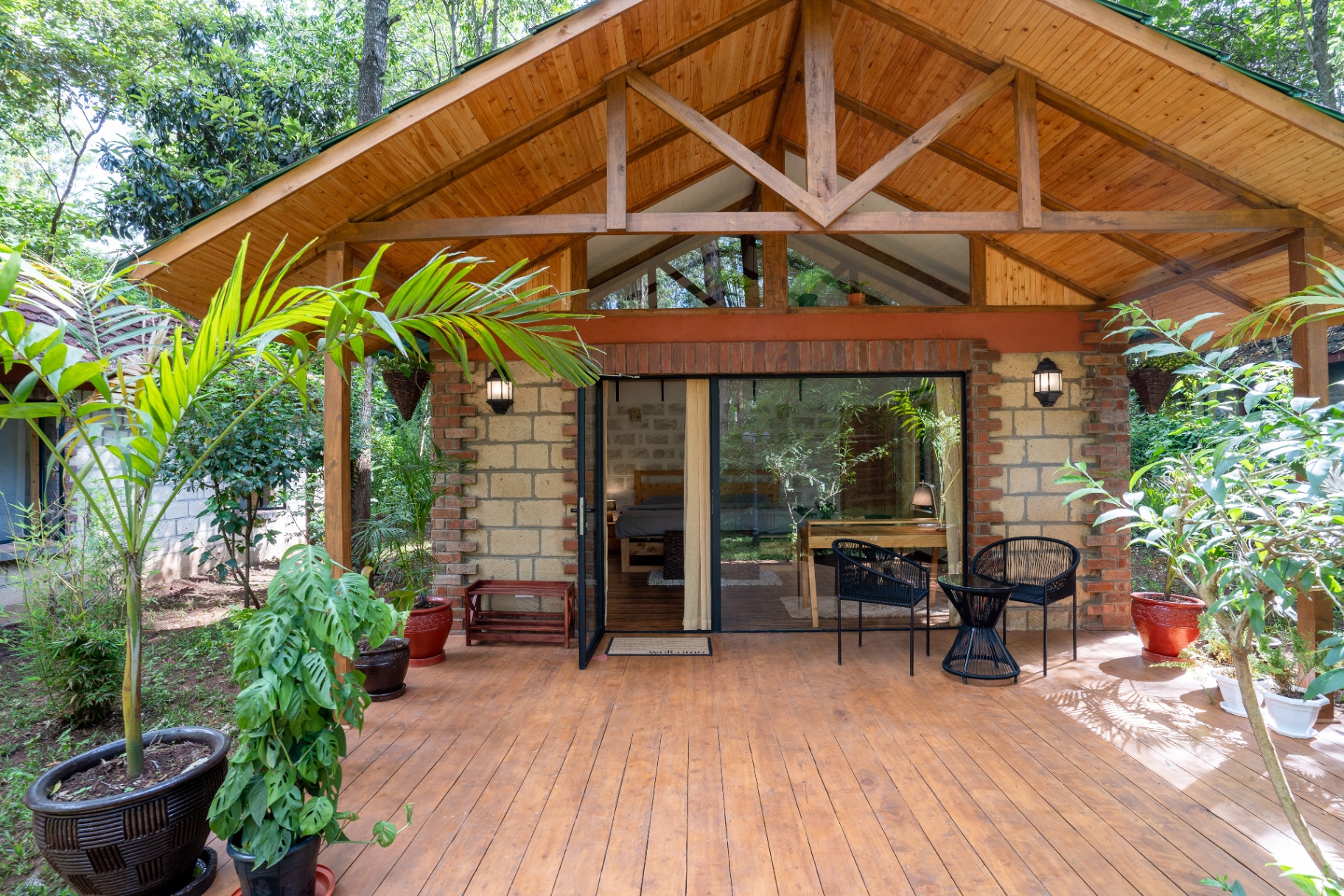
Jungle Oasis is our own self-catering accommodation in Karen, with independent units in gardens, a shared heated pool and poolside loungers. Private hot tubs belong to eligible units, not every booking. It can suit a rested starting or ending point, but Karen is not an airport terminal: include the drive when arranging departures. Explore the accommodation if that setting fits your itinerary; confirm transport separately with your provider.

Frequently Asked Questions
What is the best way to get around Kenya as a tourist?
Combine methods around the route: flights for longer distances and served safari airstrips, SGR for Nairobi–Mombasa, and road transfers for flexible door-to-door travel. Compare the complete journey, including the last leg.
Is it better to fly or drive between safari destinations?
Flying can save travel time where suitable services and camp pickups exist. Driving offers continuity and flexibility. Camp location, luggage rules, connection logistics and available days determine which works better.
Can tourists travel around Kenya by train?
Yes. The Madaraka Express serves the Nairobi–Mombasa corridor. It is not a nationwide rail connection to all safari parks or beach destinations; arrange onward road transport where needed.
How do you get from Nairobi to the Maasai Mara?
Compare a road transfer arranged with your safari operator with a scheduled flight to an airstrip serving your camp. Confirm the precise camp, access point and pickup before booking.
Can you take the SGR train to Diani Beach?
Not directly. Take the train to Mombasa Terminus at Miritini, then continue by road to Diani. Arrange the transfer and check the current road route with your provider.
Is it safe to self-drive in Kenya?
There is no blanket answer for every route and driver. Check current official travel advice, rental insurance and route conditions. Avoid unfamiliar rural driving after dark, and consider a driver-guide if you are not confident managing safari access.
Which Nairobi airport is used for safari flights?
Wilson is a major safari-flight base, but check your actual ticket. JKIA and Wilson are separate airports and a road transfer between them must be planned.
How do you travel from Nairobi to Mombasa?
Compare the Madaraka Express SGR train, domestic flights, private road travel and intercity buses. Include departure and arrival transfers when comparing time and total cost.
Do you need a car to travel around Kenya?
No. Flights, trains, booked transfers and operator-arranged safari transport can cover an itinerary without renting a car. You still need confirmed transport from stations and airstrips to your accommodation.
For the wider plan, compare where to stay in Kenya, the Kenya packing list and the safari-and-beach itinerary guide. These cover accommodation, equipment and holiday design rather than repeating transport comparisons.
Choosing the Right Way to Travel Around Kenya
Fly when time savings and available services justify it; consider the SGR for Nairobi–Mombasa; use road transport where flexibility and doorstep access matter. Coordinate safari legs with the camp or operator. The best itinerary is one whose connections work together, leaving enough time to enjoy the destinations between them.
Sources and Last-Checked Details
Checked on 30 October 2026: Kenya Railways’ official booking portal and ticket terms for rail services and conditions; Safarilink and AirKenya’s route and baggage guidance for flight planning; NTSA and official government travel advice for driving. The Kenya National Highways Authority provides Dongo Kundu project context; Kenya News Agency’s Likoni reporting describes the crossing. Consult Safarilink’s baggage guidance and AirKenya’s baggage policy for your service. These sources support the general guidance, not live traffic, seat availability or guaranteed connections.