
15
minute read
16
sections
10
questions answered
Imagine thousands of wildebeest moving across the open plains of East Africa. Dust rises from the grasslands, zebras gather alongside the herds, and predators watch for opportunities.
For many travellers, witnessing the Great Migration is the ultimate African safari experience.
But planning a migration safari involves more than simply booking a trip to the Maasai Mara in August.
The migration is a year-round movement of wildlife through the wider Serengeti–Mara ecosystem. Its timing changes with rainfall, grazing conditions and animal behaviour. Even during the most popular months, dramatic river crossings are never guaranteed.
So when should you visit Kenya to see the Great Migration? Where should you stay? And how many days do you need?
This guide explains what to expect, how to plan your safari and why flexibility can make the difference between a frustrating trip and an unforgettable wildlife experience.
What Is the Great Migration?
The Great Migration is the seasonal movement of enormous herds of wildebeest, accompanied by zebras and other grazing animals, through the Serengeti–Mara ecosystem of Tanzania and Kenya.
The animals move in search of grazing and water as environmental conditions change.
It is often described as a circular migration, although the herds do not all travel together or follow a perfectly predictable route.
Different groups may move at different times, and some animals remain in particular areas for extended periods.
The migration also attracts predators, including lions, cheetahs and hyenas, creating a dynamic wildlife ecosystem.
For visitors, the experience is about much more than watching a river crossing. The scale of the herds, the landscapes and the interactions between animals can be remarkable in their own right.
When Is the Great Migration in Kenya?
The most widely recognised migration season in Kenya generally falls between July and October, when substantial numbers of migratory wildebeest may be present in the Maasai Mara.
However, these months are a broad planning guide rather than a fixed wildlife calendar.
Rainfall patterns can cause herds to arrive earlier, later or move differently from one year to the next.
July: The Migration Season Begins
July is traditionally associated with the arrival of migratory herds into the Maasai Mara ecosystem.
Depending on conditions, large groups of wildebeest and zebras may begin moving through the region.
River crossings may occur, but their timing is unpredictable.
For travellers, July can offer excellent wildlife viewing opportunities without requiring a crossing to make the safari worthwhile.
August: A Popular Migration Month
August is one of the most sought-after months for visiting the Maasai Mara.
Large herds may be present, and the possibility of river crossings attracts photographers and safari enthusiasts.
However, popularity also means that some areas can become busy with safari vehicles.
Accommodation in desirable locations may book well in advance.
If you are planning an August safari, focus on choosing a good location and experienced guide rather than expecting a guaranteed crossing.
September: Migration and Wildlife Viewing
September is another popular month for migration-focused safaris.
Depending on rainfall and herd movements, substantial numbers of animals may still be present in the Mara ecosystem.
The month can offer rewarding game drives, but there is no guarantee that the herds will be in a particular part of the reserve.
October: A Transitional Period
October can still offer migration-related wildlife viewing, although herds may begin moving south as conditions change.
The timing varies significantly between years.
Travellers visiting in October should avoid relying on a fixed expectation that the migration will still be concentrated in Kenya.
Great Migration Timing at a Glance
| Month | General expectation in the Maasai Mara |
|---|---|
| June | Some early movements may occur; large-scale arrival is not assured |
| July | Traditional beginning of the main migration period |
| August | Popular month for large herds and possible crossings |
| September | Often a strong month for migration-related viewing |
| October | Herds may remain or begin moving south |
| November onward | Many migratory herds are generally farther south, depending on conditions |
Important: This is a historical seasonal pattern, not a forecast. No operator can reliably guarantee where the herds will be on a specific date.
Can You Guarantee a Mara River Crossing?
No.
This is one of the most important things to understand before booking a Great Migration safari.
River crossings are dramatic wildlife events, but they are highly unpredictable.
Herds may gather near a riverbank for hours before deciding not to cross. Some may move away entirely, while others cross at unexpected locations or times.
A crossing might happen shortly before you arrive or after you leave.
Even spending several days in the region does not guarantee that you will witness one.
Be cautious of safari advertisements that promise a crossing on a particular day.
A reputable operator should explain the uncertainty rather than create unrealistic expectations.
Is the Migration Still Worth Seeing Without a Crossing?
Absolutely.
Watching enormous herds spread across the grasslands can be extraordinary.
You may also encounter lions, cheetahs, elephants, giraffes, buffaloes and numerous bird species.
The Maasai Mara is a rewarding wildlife destination even when the migration is not at its peak.
Treat a river crossing as a possible highlight, not the sole measure of a successful safari.
Where Is the Best Place to See the Great Migration?
The Maasai Mara ecosystem includes the national reserve and surrounding wildlife conservancies.
Choosing where to stay can significantly affect your experience.
Maasai Mara National Reserve
The Maasai Mara National Reserve is the best-known destination for migration safaris in Kenya.
It contains important wildlife habitats and sections of the Mara River associated with migration crossings.
Staying within the reserve, or in a location with practical access to the areas you want to explore, can reduce unnecessary travel.
However, the reserve can become busy during popular migration periods.
Vehicle concentrations around major wildlife sightings are possible.
Mara Triangle
The Mara Triangle forms part of the wider Maasai Mara protected landscape and is managed separately from the main reserve area.
It is known for its wildlife habitats and sections of the Mara River.
The experience depends on where the animals are moving and the particular routes available to your guide.
Check the current access rules and accommodation logistics before booking.
Private and Community Conservancies
Several conservancies surround the Maasai Mara National Reserve.
These areas may offer a different safari experience, sometimes with lower vehicle densities and activities that are not available in the reserve itself.
However, conservancy rules, access rights, vehicle limits and permitted activities vary.
Importantly, staying in a conservancy does not necessarily mean you will have immediate access to the river-crossing areas.
Some packages include game drives in the national reserve, while others require separate arrangements or additional fees.
Ask your safari operator exactly where your game drives will take place.
How Many Days Do You Need for a Great Migration Safari?
If the Great Migration is your main reason for visiting Kenya, avoid planning an extremely short safari.
Wildlife movements are unpredictable, and spending more time in the ecosystem gives you additional opportunities to observe the herds.
Two Nights
Two nights can provide a worthwhile introduction to the Maasai Mara.
However, travel time and the limited number of game drives may restrict your opportunities.
This is not ideal if your main ambition is to witness migration activity.
Three to Four Nights
For many first-time visitors, three or four nights provide a better balance.
You can explore different areas, enjoy several game drives and avoid feeling rushed.
There is also more flexibility if wildlife activity is quiet on a particular day.
Five Nights or More
A longer stay may appeal to wildlife photographers and travellers whose primary focus is observing migration behaviour.
Additional days provide more opportunities to respond to changing animal movements.
However, no length of stay guarantees a river crossing.
Our recommendation: If your budget allows, consider at least three nights in the Maasai Mara during the migration season.
Is It Better to Fly or Drive to the Maasai Mara?
Both options can work well, but they offer different experiences.
Driving From Nairobi
A road safari allows you to travel through Kenya's landscapes on the way to the Maasai Mara.
It is often more economical than flying, particularly for groups.
However, the journey takes several hours, and travel time depends on road conditions, traffic, weather and the location of your accommodation.
You should not assume that arrival day will include a full game drive.
Flying From Nairobi
Domestic safari flights can significantly reduce the time spent on long road journeys.
Many services use Wilson Airport in Nairobi, although flight arrangements depend on the operator and route.
Flights typically land at designated safari airstrips, where onward transfers may be required.
Baggage restrictions are often more restrictive than those on international flights.
Fly-in safaris generally cost more but can be worthwhile for travellers with limited time.
Which Option Is Better?
If you have a short holiday and want to maximise time on safari, flying may be worth the additional expense.
If you have more time or are travelling with a group, driving can offer better value.
Always compare the complete itinerary, not simply the transport price.
Where Should You Stay During the Great Migration?
Accommodation in the Maasai Mara ranges from relatively simple camps to high-end safari lodges.
The most important factor is often location rather than luxury level.
A beautiful lodge that requires lengthy daily transfers may not be the best choice for a migration-focused safari.
Before booking, ask:
- Is the property inside the reserve, in a conservancy or outside the protected area?
- Which game-drive areas can guests access?
- Are reserve or conservancy fees included?
- How long does it typically take to reach relevant wildlife-viewing areas?
- Are game drives shared or private?
- How many game drives are included?
- Are full-day game drives possible?
- What happens if the herds are concentrated in a different part of the ecosystem?
During peak migration months, well-located accommodation can be in high demand.
Booking early may provide more choice, but do not rush into paying a deposit before understanding the cancellation terms.
How Much Does a Great Migration Safari Cost?
There is no single standard price for a migration safari.
Costs vary based on accommodation, season, transport, guiding arrangements and the number of travellers.
Peak migration periods can command higher accommodation rates because of demand.
Your total safari cost may include:
- Accommodation and meals.
- Park or reserve entry fees.
- Conservancy fees where applicable.
- Safari vehicle and guide.
- Domestic flights or road transfers.
- Airstrip transfers.
- Optional activities.
- Tips and personal expenses.
When comparing packages, make sure you are comparing the same number of nights, accommodation standard, park access and game-drive arrangements.
A package that initially appears cheaper may exclude substantial fees.
Ask for a clear written quotation before booking.
Is the Great Migration Suitable for Families?
Yes, a migration safari can be a memorable family experience, but it requires realistic planning.
Long game drives and early mornings may be tiring for younger children.
For families, consider:
Game-drive flexibility: A private vehicle may allow you to adjust the schedule more easily.
Accommodation policies: Some camps have minimum-age requirements or restrictions for certain activities.
Travel time: Flying may reduce the length of the journey, although it introduces additional baggage and flight logistics.
Wildlife safety: Children must follow the instructions of guides and accommodation staff.
Downtime: Avoid filling every day with lengthy game drives.
For families with teenagers, the migration can be especially engaging if they enjoy photography, wildlife or nature documentaries.
However, the experience should be presented as an opportunity to observe nature, not a promise of dramatic predator encounters.
Great Migration Photography Tips
The Maasai Mara is a popular destination for wildlife photography.
You do not need professional equipment to enjoy photographing the migration, but preparation helps.
Bring Suitable Equipment
A camera with a telephoto lens can be useful for photographing distant animals.
Binoculars can also make wildlife viewing more enjoyable.
If you are using a phone, focus on wider landscape compositions rather than expecting close-up images of distant wildlife.
Be Patient
Wildlife photography involves waiting.
Animals may remain still for long periods before moving unexpectedly.
Allow your guide to position the vehicle responsibly and avoid pressuring them to approach too closely.
Think Beyond River Crossings
Some of the most memorable images may feature herds stretching across the plains, animals silhouetted against the landscape or quieter interactions between wildlife.
Protect Your Equipment
Dust can be an issue during dry periods.
Bring appropriate protective storage and enough batteries or charging equipment for long game drives.
Above all, follow wildlife-viewing rules and prioritise animal welfare over getting a particular photograph.
Responsible Wildlife Viewing During the Migration
The Great Migration attracts large numbers of visitors.
Responsible behaviour matters, particularly around river crossings and predator sightings.
Follow your guide's instructions and the rules of the reserve or conservancy.
Avoid:
- Pressuring drivers to chase animals.
- Blocking migration routes.
- Crowding animals at riverbanks.
- Making unnecessary noise.
- Driving off permitted tracks.
- Feeding wildlife.
- Using drones without the required permissions.
The welfare of the animals should take priority over obtaining a dramatic photograph.
Choose safari operators that demonstrate respect for conservation rules and local communities.
Planning Your Nairobi Stay Before or After the Maasai Mara
Most international visitors travelling to the Maasai Mara begin their Kenya journey in Nairobi.
That makes the capital an important part of the overall safari itinerary.
Rather than treating Nairobi only as a transit point, consider whether an overnight stay would make your trip more comfortable.
Before Your Safari
If your international flight arrives late, spending a night in Nairobi can give you time to recover before continuing to the Maasai Mara.
It can also help avoid arranging an ambitious onward journey immediately after a long flight.
After Your Safari
An overnight stay in Nairobi can provide a buffer before your international departure.
This may be particularly useful when returning by road or connecting from a domestic safari flight.
It also gives you an opportunity to enjoy a relaxed meal, explore a Nairobi attraction or simply unwind.
Staying at Jungle Oasis Nairobi
For travellers looking for a quieter place to stay before or after safari, Jungle Oasis offers boutique accommodation in Karen, Nairobi.
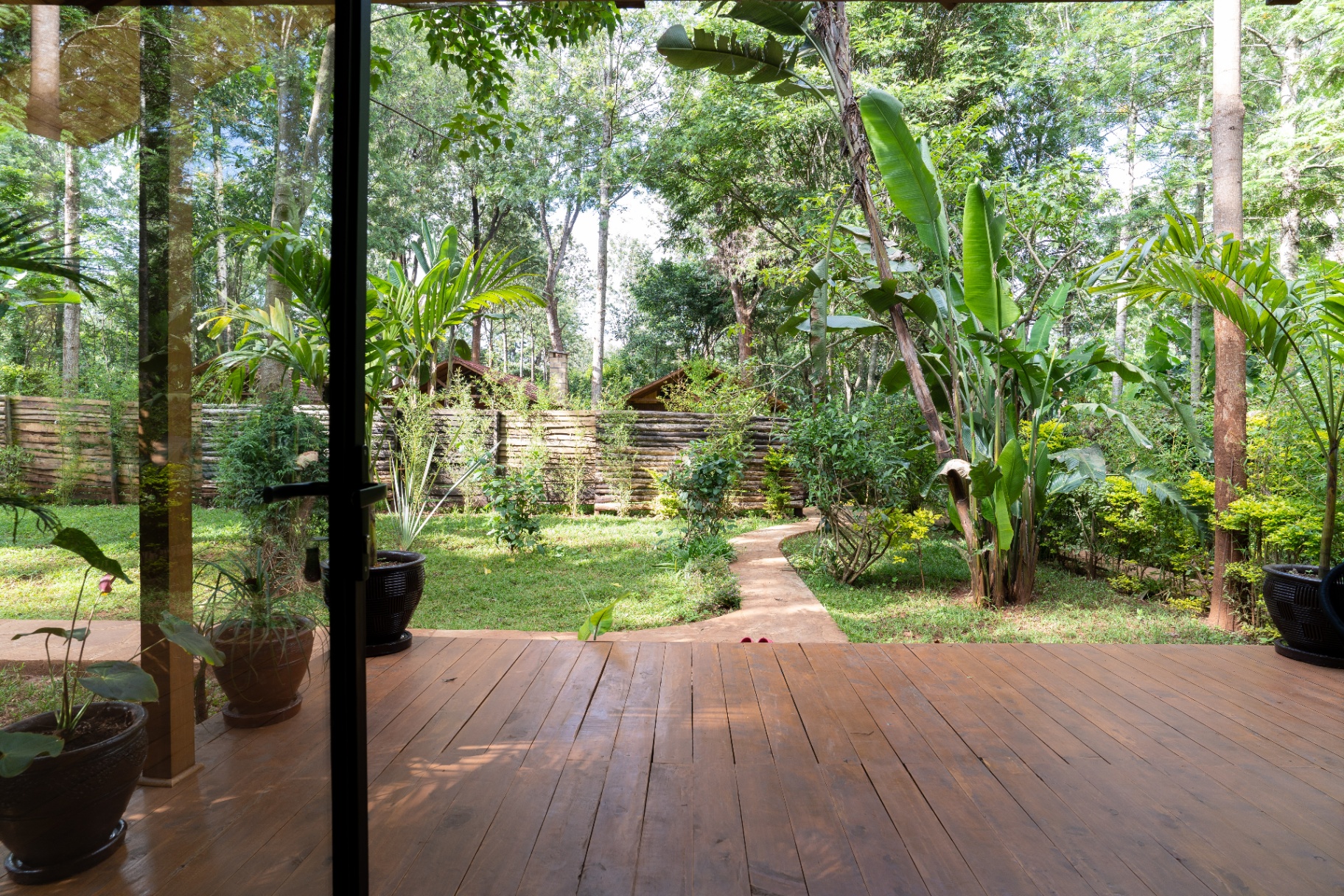
The property features garden surroundings, different accommodation options and a shared heated swimming pool.
It can be a comfortable base for visitors who want to enjoy a little more of Nairobi rather than immediately continuing their journey.
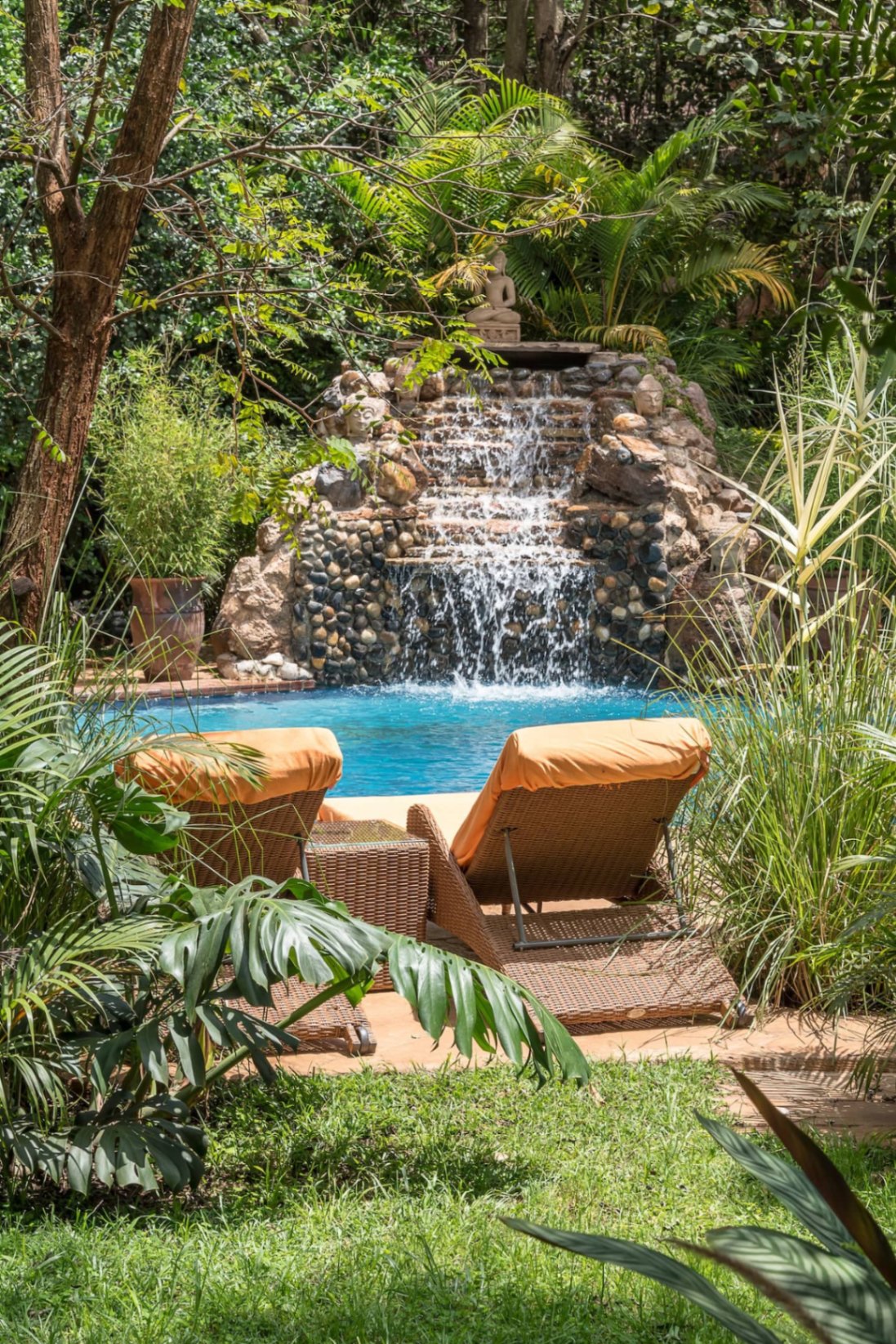
Karen is not directly beside Jomo Kenyatta International Airport or Wilson Airport, so allow sufficient time for transfers.
Explore the accommodation options at Jungle Oasis when planning the Nairobi portion of your Kenya safari.
A Sample Seven-Day Great Migration Itinerary
Here is one way to combine a Maasai Mara safari with a relaxed arrival and departure.
Day 1: Arrive in Nairobi
Arrive at Jomo Kenyatta International Airport and transfer to your accommodation.
Keep the day relaxed, especially after a long international flight.
Day 2: Travel to the Maasai Mara
Continue to the Maasai Mara by road or domestic flight.
Depending on arrival time, enjoy an introductory game drive.
Day 3: Explore the Maasai Mara
Spend the day exploring suitable wildlife-viewing areas with your guide.
Day 4: Follow Wildlife Activity
Allow flexibility for game drives based on current wildlife movements and local conditions.
Day 5: Another Full Safari Day
Enjoy further game drives, photography or other permitted activities.
Day 6: Return to Nairobi
Travel back to Nairobi and spend the evening relaxing.
Day 7: Depart Kenya
Enjoy breakfast or a short activity if your flight schedule allows, then transfer to the airport.
This itinerary prioritises time in the Maasai Mara rather than trying to combine several distant parks.
Actual routing should be adjusted to flight schedules, accommodation location and travel conditions.
Common Great Migration Planning Mistakes
Expecting a Guaranteed River Crossing
Crossings are unpredictable, even during peak season.
Booking Too Few Nights
A very short stay limits your opportunities to explore the ecosystem.
Choosing Accommodation Based Only on Price
Location and game-drive access can matter more than the room itself.
Ignoring Park and Conservancy Fees
Different access arrangements may affect the total cost.
Assuming the Migration Happens on Fixed Dates
Animal movements respond to environmental conditions, not a calendar.
Planning Tight Flight Connections
Allow realistic buffers between safari transfers and international flights.
Overlooking Vehicle Arrangements
Private and shared game drives can offer very different levels of flexibility.
Trying to Visit Too Many Destinations
If migration viewing is your priority, spending more time in the Maasai Mara may be more rewarding than adding multiple parks.
Frequently Asked Questions
What is the best month to see the Great Migration in Kenya?
July to October is the traditional migration period in the Maasai Mara, with August and September often popular choices. Actual herd movements vary each year.
Can you see the Great Migration in June?
Some migratory activity may occur, but large-scale herd movements into the Maasai Mara are not guaranteed in June.
Is the Great Migration guaranteed in August?
No. August is historically a popular month, but the location and behaviour of the herds depend on environmental conditions.
Can you guarantee a river crossing?
No. River crossings are unpredictable, and no responsible safari operator should promise one on a specific date.
How many days do you need in the Maasai Mara?
Three or four nights provide a useful starting point for a migration-focused safari. Longer stays offer additional opportunities but cannot guarantee specific sightings.
Is the Great Migration only in Kenya?
No. The migration takes place across the wider Serengeti–Mara ecosystem in Tanzania and Kenya.
Is the Maasai Mara worth visiting outside migration season?
Yes. The Maasai Mara supports diverse wildlife throughout the year, although sightings and conditions vary.
Should you stay inside the Maasai Mara National Reserve?
Staying within the reserve can provide convenient access to certain game-drive areas, but accommodation in surrounding conservancies may also offer excellent experiences. Compare access rights, fees and logistics.
Is a Great Migration safari expensive?
It can be, particularly during peak demand. Costs vary widely according to accommodation, transport, guiding and included fees.
Do you need to book a migration safari in advance?
Advance booking is advisable if you want specific accommodation or are travelling during popular months. Always review payment and cancellation terms.
Final Thoughts: Is the Great Migration Worth It?
The Great Migration is one of the world's most remarkable wildlife phenomena, but it is important to approach it with realistic expectations.
The experience is not simply about witnessing a dramatic river crossing.
It is about exploring an extraordinary ecosystem, watching wildlife in its natural environment and experiencing the landscapes of the Maasai Mara.
Choose your travel dates carefully, allow enough time, select accommodation based on location and work with an experienced safari operator.
Most importantly, remember that nature does not follow a fixed schedule.
For travellers arriving in Kenya through Nairobi, adding a comfortable overnight stay before or after the safari can make the overall journey more relaxed.
Jungle Oasis in Karen offers boutique accommodation with garden surroundings and a shared heated swimming pool, providing a peaceful place to begin or end your Kenya adventure.
Explore Jungle Oasis and plan your Kenya holiday at a pace that allows you to enjoy every stage of the journey.
Travel information note: Migration timing, park fees, conservancy access rules, flight schedules and accommodation availability can change. Confirm current details with official authorities and your safari operator before booking.