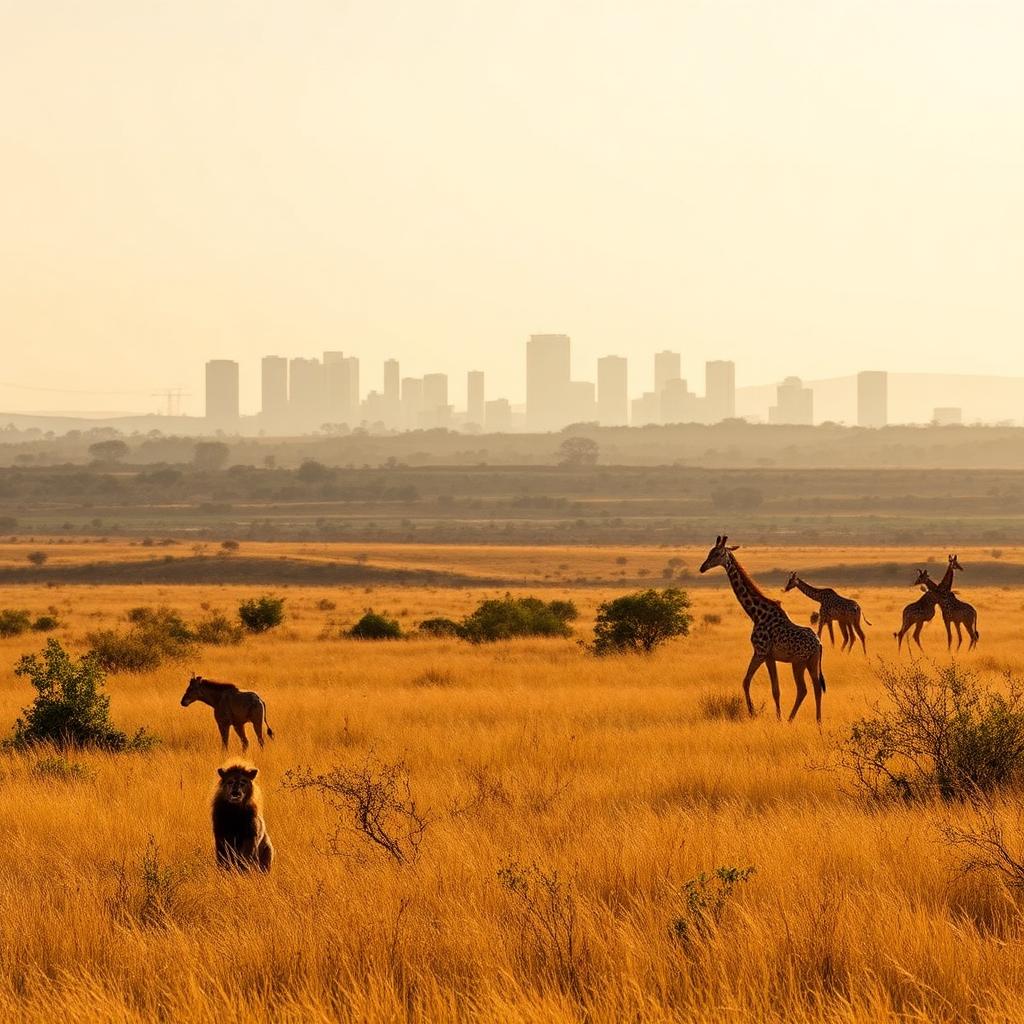

Most Kenya safaris begin and end in Nairobi, yet the nights either side of the safari are often the least planned part of the whole trip. Flights are booked, camps are confirmed — and the arrival day is left to chance. A little structure here changes how the entire journey feels.
Should you spend a night in Nairobi before your safari? For most international travellers, yes. Long-haul flights arrive at awkward hours, safari departures leave early, and a buffer night turns a rushed connection into a rested start. One night is enough for a simple rest stop; two nights gives you a full day to actually enjoy Nairobi. The same logic applies in reverse: a final night after your safari protects your flight home from the uncertainties of road journeys and domestic connections.
This guide is about the mechanics: how to sequence your arrival, coordinate with your safari operator, choose between one and two nights, and decide where to stay. It is not a safari guide — for that, see our complete guide to safaris in Nairobi.
Should You Stay in Nairobi Before Your Safari?
In most cases, yes — and the reasons are practical rather than sentimental. International flights into Jomo Kenyatta International Airport (JKIA) often land in the evening or late at night, while safari departures typically leave Nairobi early in the morning. Trying to connect the two directly means landing tired, clearing immigration, and hoping your luggage, your transfer and your safari driver all align within a few hours. Sometimes that works. Often it is simply stressful.
A night in Nairobi before your safari gives you:
- Time to recover from a long-haul flight before early-morning game drives begin
- A buffer against delayed flights, lost luggage and slow immigration queues
- A relaxed first meeting with your safari driver or operator, rather than a curbside handover
- A chance to check your luggage, repack into soft bags if your safari flight requires them, and confirm you have your essentials
- A gentle introduction to Kenya — a good meal, a quiet night, maybe a first giraffe sighting — before the intensity of the bush
There are exceptions. If your international flight lands early in the morning, your safari operator has confirmed a same-day pickup, and your onward arrangements are protected, connecting directly can be reasonable. Some travellers arriving on regional flights from elsewhere in Africa also skip the Nairobi night. The question is not whether it is possible — it is whether the saving of one hotel night is worth the risk and the fatigue. For most people arriving off an intercontinental flight, it is not.
One Night or Two Nights in Nairobi?
The right answer depends less on the number of calendar days than on your arrival and departure times. A traveller landing at 9pm and departing at 7am has, in practical terms, no time in Nairobi at all — two 'nights' of that shape would still mean no sightseeing. Compare the options honestly against your actual flight schedule:
| Length of stay | What it allows | Who it suits |
|---|---|---|
| One night | Arrival, dinner, sleep, breakfast, safari pickup | Travellers who mainly need a rest stop before onward travel |
| Two nights | One full day for a wildlife experience, Karen attractions or simply relaxing | Travellers who want to arrive rested and see a little of Nairobi |
| Three nights or more | A fuller exploration of the city and its surroundings | Travellers treating Nairobi as a destination in its own right |
If you have three or more nights, Nairobi rewards the time — but that becomes a different kind of trip, and our guide to things to do in Karen and safaris in Nairobi cover it better than this article can. What follows assumes the more common situation: one or two nights, planned well.
Arriving in Nairobi — What Happens After You Land?
Almost all international arrivals come through Jomo Kenyatta International Airport. The sequence is the standard one — immigration, baggage collection, customs, then out into the arrivals hall — but a few Kenya-specific points are worth knowing before you travel.
Kenya operates an electronic travel authorisation (eTA) system rather than traditional visas for most nationalities, applied for online in advance via the official portal at etakenya.go.ke. Kenya has also introduced a mandatory travel health insurance requirement for visitors, announced in 2026 — check the current entry requirements through official Kenyan government sources before you fly, as the details and exemptions can change. Arrive with your eTA approval, insurance documentation and accommodation details accessible offline.
From touchdown to the arrivals hall, allow 45 minutes to well over an hour for immigration and baggage, longer when several large flights land together. Then comes the drive. In light traffic, JKIA to Karen takes roughly 40 to 60 minutes; in weekday rush hours it can stretch to 90 minutes or more. From landing to a Karen doorstep, two hours is a sensible working assumption in decent conditions. Our Nairobi airport to Karen guide compares taxis, ride-hailing and pre-booked transfers in detail, including late-night arrivals.
Two habits make arrival day notably smoother. First, share your flight number and expected arrival time with your accommodation in advance, so someone is expecting you — especially for late check-ins. Second, confirm with your safari operator exactly where and when you will be picked up the next morning, and make sure your accommodation knows too. If you are flying in from North America, our New York to Nairobi guide covers the long-haul arrival in more detail.
Planning Your Safari Departure From Nairobi
Safaris leave Nairobi in two broad ways, and which one applies to you shapes your whole morning.
Road departures
Many safaris to the Maasai Mara, Amboseli and other parks begin with a road transfer in a safari vehicle. Your driver-guide typically collects you from your accommodation early in the morning — confirm the exact pickup time and location the day before, and be ready a little early. A property with flexible, self-catering mornings makes this easier than a hotel with a fixed breakfast window.
Domestic and safari flights
Fly-in safaris usually depart from Wilson Airport, Nairobi's domestic and safari aviation hub on Langata Road — not from JKIA. Wilson is much closer to Karen than JKIA: roughly 10 to 12 kilometres, typically a 15 to 25 minute drive off-peak. Safari flights usually restrict luggage to soft bags with strict weight limits, so the night before is the time to repack and arrange storage for anything you will not take.
Whichever applies, confirm three things in advance with your operator: the departure point (JKIA, Wilson, or a road pickup), the exact time, and what happens if your plans change. Operators who arrange transfers will often handle the logistics for you — ask what is already included before booking anything separately.
A Practical One-Night Pre-Safari Itinerary
This is the most common pattern: an afternoon or evening arrival, one night, and a safari departure the next morning. It is simple, and that is the point.
The one-night plan
Afternoon or evening
Arrive and transfer
Land at JKIA, clear immigration, and take a pre-arranged transfer or ride-hailing to your accommodation. Share your flight details in advance so a late arrival is expected.
Evening
Dinner and rest
Eat something simple — self-catering means you can keep it as light as you like — repack for the safari's luggage rules, confirm the morning pickup, and sleep properly.
Morning
Breakfast and pickup
Breakfast on your own schedule, bags ready, and a confirmed pickup by your safari driver or transfer to Wilson Airport. No rushing, no surprises.
One night works when your arrival and departure times are reasonable and your onward arrangements are confirmed. It is a rest stop, not a visit — plan it as one and it will serve you well.
A Practical Two-Night Pre-Safari Itinerary
Two nights gives you one full day in Nairobi, and that day is worth more than most travellers expect. The key is to choose one or two things, not five.
The two-night plan
Day 1
Arrive and settle in
Transfer from the airport, an unhurried evening, and an early night. Let the jet lag start working itself out.
Day 2
One full day in Nairobi
Choose your own emphasis: a morning game drive in Nairobi National Park, a few Karen attractions such as the Giraffe Centre and Karen Blixen Museum, or a deliberately quiet day at your accommodation by the pool.
Day 3
Depart for safari
Rested, repacked and on time for your pickup or Wilson departure.
For the wildlife option, where to stay near Nairobi National Park explains how the park works on a short visit; for the Karen option, our guide to things to do in Karen has the details. If your dates are flexible, the best time to visit Nairobi is worth a read before you fix them.
Should You Stay in Nairobi After Your Safari?
The case for a final night is at least as strong as the case for the first. Safaris end the way they begin: early starts, long road journeys, or domestic flights back into Wilson. Connecting directly from a safari vehicle to an international departure is possible, but it chains your flight home to everything that can go wrong on the road that day.
A final overnight stay gives you:
- Protection against overly tight connections when safari return times slip
- Rest after long, dusty road journeys
- Time to reorganize luggage — reuniting soft safari bags with the suitcases you stored
- A proper shower, a comfortable bed and a relaxed final meal in Kenya
- A calm final morning instead of a pre-dawn dash to the airport
No itinerary can eliminate the risk of a missed flight entirely — but an overnight buffer converts most of the common failure modes into minor inconveniences rather than missed intercontinental departures.
How Much Time Should You Leave Before Your International Flight?
There is no honest universal minimum, and you should be suspicious of anyone who offers one. The right buffer depends on your safari's return schedule, whether you are returning by road or domestic flight, Nairobi's traffic on that particular day, and your airline's check-in requirements.
A few principles hold broadly. Follow your airline's guidance on check-in and bag-drop deadlines — for intercontinental departures from JKIA this typically means being at the airport several hours before departure. Treat domestic flight schedules and road return times as estimates, not guarantees; weather, airstrip conditions and traffic all move them. And distinguish between separate and protected bookings: if your safari flight and your international flight are on separate tickets, you carry the risk of a misconnection yourself, which argues for a larger buffer — most sensibly, an overnight one.
The practical approach is to plan backwards with your safari operator: agree a realistic return time into Nairobi, add a generous margin, and let that determine whether your last night belongs in Nairobi or on the plane.
Where Should You Stay Before or After Safari?
Nairobi offers four broad styles of pre- and post-safari accommodation, each with honest tradeoffs:
| Option | Strengths | Tradeoffs |
|---|---|---|
| Airport hotels | Shortest transfer to JKIA; practical for very tight connections | Functional rather than memorable; little sense of place |
| City hotels | Full service, restaurants, central locations | Traffic, noise and a generic feel far from the safari mood |
| Serviced apartments | Space and kitchens for families and longer stays | Quality varies widely; less personal than smaller properties |
| Private cottages in Karen | Quiet gardens, self-catering flexibility, close to Karen attractions and Wilson Airport | Further from JKIA than airport hotels; a car or transfer is needed for most outings |
For a very short connection — landing late, leaving at dawn — an airport hotel is genuinely the sensible choice, and we would say so even though it is not what we offer. Karen suits travellers who have at least a full day, or who value a quieter, greener setting with self-catering independence over raw proximity to the terminals. Karen is not always the fastest location for airport access, and in rush hour it is certainly not — but for a relaxed pre- or post-safari stay, the tradeoff is usually worth it.
Staying at Jungle Oasis Before or After Safari
Full disclosure: this is our property, so read this section as what it is. Jungle Oasis is a small self-catering property in Karen — a Studio, two private cottages and a two-bedroom loft apartment, each with ensuite bedrooms, its own kitchen and Wi-Fi, set in mature gardens. The heated swimming pool (roughly 26–28°C), poolside loungers, gardens and outdoor fireplace are shared; the Studio and Cottage Two each have a private hot tub, and there is a pickleball court for guests who want to move after long hours in planes and vehicles.

For safari travellers specifically, a few things tend to matter most. Self-catering means breakfast on your own schedule before an early pickup, and a light dinner whenever you arrive. The gardens and pool give a full free day genuine substance — a day here is rest, not dead time. And Karen's position works well for safari logistics: Wilson Airport is a short drive away for fly-in safaris, Nairobi National Park is about 20 minutes from the property, and road departures heading south and west avoid the city centre entirely.
We do not operate safaris or run an airport shuttle ourselves, but we are happy to advise on trusted transfer options, coordinate your arrival details when you book, and point you toward the right questions to ask your safari operator. If you would like a guided experience closer to the city, our private Nairobi safari experience page explains what is possible.
Your Pre- and Post-Safari Planning Checklist
Not a packing list — a coordination list. Work through it before you fly:
- Flight details: arrival and departure times shared with your accommodation and safari operator
- Entry documentation: eTA approval, mandatory travel health insurance and passport validity confirmed via official Kenyan sources
- Accommodation booked for the nights before and after the safari, with late check-in arranged if needed
- Safari operator contact: names, phone numbers and a confirmed pickup time and location
- Airport transfer arranged or planned, with the pickup point confirmed
- Departure point confirmed: JKIA, Wilson Airport or a road pickup from your accommodation
- Domestic flight details and luggage restrictions checked — soft bags and weight limits on most safari flights
- Luggage storage arranged for anything not going on safari
- Travel insurance covering both the safari and the international flights
- Medication and essentials carried in hand luggage, not checked bags
- A sensible time buffer between your safari return and your international departure
- Payment arrangements: cards, some cash, and mobile money where useful
Frequently Asked Questions
Should I stay in Nairobi before going on safari?
For most international travellers, yes. Long-haul arrivals and early safari departures rarely align comfortably, and a night in Nairobi provides rest and a buffer against delays. Direct connections can work for early-morning arrivals with confirmed onward arrangements.
Is one night in Nairobi enough before a safari?
Yes, if your goal is rest and a smooth departure. One night covers arrival, dinner, sleep and a morning pickup. It does not leave time for sightseeing — for that, plan two nights.
Is it better to spend two nights in Nairobi?
Two nights gives you one full day — enough for a Nairobi National Park game drive, a few Karen attractions, or a proper day of rest by the pool. If your schedule allows it, most travellers find the extra day worthwhile.
Should I stay overnight after returning from safari?
Strongly consider it. Safari return times by road or domestic flight are estimates, and an overnight buffer protects your international departure from delays. It also gives you a proper shower, a good meal and time to repack before a long flight home.
Which airport do Nairobi safari flights depart from?
Most fly-in safaris depart from Wilson Airport on Langata Road, Nairobi's domestic and safari aviation hub — not from JKIA. Wilson is roughly 10 to 12 kilometres from Karen, typically a 15 to 25 minute drive off-peak.
Where should I stay in Nairobi before a safari?
It depends on your schedule. Airport hotels suit very tight connections; city hotels suit those wanting full service; private cottages in Karen suit travellers who want quiet gardens, self-catering flexibility and easy access to Karen attractions and Wilson Airport.
Can I visit Nairobi National Park before a longer safari?
Yes — the park is a genuine national park with free-ranging wildlife immediately alongside the city, and a morning game drive fits well into a two-night pre-safari stay. It is about 20 minutes from Karen. See our guide to safaris in Nairobi for how to plan it.
The Right Amount of Time Is the Amount You Planned
Nairobi can be more than a logistical stop — but it does not have to be. What matters is that the nights before and after your safari are chosen deliberately, with your flight times, your operator's schedule and your own energy in mind, rather than left as gaps in the itinerary. Plan them well, and the whole safari starts and ends more gently.
If a quiet, green base in Karen sounds like the right shape for those nights, we would be glad to host you.